Written By: Valerie Belopolsky
Edited By: Arjun Singh
Designed By: Danujan Krishnakumar
Published By: Mannat Malhan
Every year when spooky season comes around, the first thing every household does is purchase a pumpkin to carve. You might spot them in your neighbourhood, maybe even on your own porch. However, behind all those playful, carved faces lies a staggering reality: millions of pumpkins end up in landfills.
In Canada alone, each year over 10 million pumpkins are purchased for Halloween; by the end of November, the majority end up in landfills. As a society, we should stop seeing pumpkins only as Halloween decorations and instead recognize them for what they are: a nutritious food. Here is an extensive list of what you can do with your pumpkin after Halloween.
Pumpkin puree is an indispensable part of every fall recipe. Pumpkin puree is often sold across all grocery stores during the fall season, but make sure to read the label and ingredients—pumpkin puree is not pumpkin pie mix. Pumpkin pie mix contains chemical additives to create its artificial flavour, while pumpkin puree has just one ingredient: pumpkin, which makes it so easy to make at home!
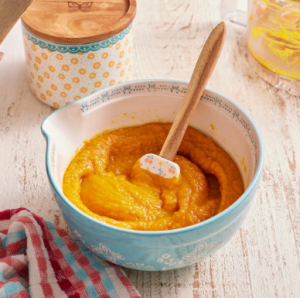
To make your pumpkin puree, slice your pumpkin in half, scoop out the stringy guts and seeds, but make sure not to throw the seeds out, and place the cut side down on a baking sheet. Bake at 400°C for 30-55 minutes and let cool for 10-15 minutes after baking. Then, peel away the skin and place the now soft flesh into a blender/food processor. Most at-home purees turn watery because most pumpkins in the grocery store are larger and have greater liquid content.
To rid the puree of liquid, use a fine-mesh sieve lined with cheesecloth or a coffee filter for an hour to let excess moisture drip out. Once your puree is finished, you can store it inside an airtight container in your fridge for 5-7 days or in the freezer for 3-6 months. Now you have the key to all fall recipes.
Pumpkin seeds are an excellent source of fibre and plant-based protein.
To make them at home, scoop out the guts and seeds of a pumpkin. To make the cleaning process easy, place the guts in a bowl of water and wait till the seeds swim up to the top to peel them away. After you’ve collected all your seeds, transfer them to a colander and rinse under cold water to rid the seeds of any leftover guts. Dry the seeds well before coating them in olive oil or melted butter and your favourite seasoning. Spread the seeds out on a baking sheet before baking for 35-45 minutes at 302F until crispy and golden brown. Now you have a healthy snack.
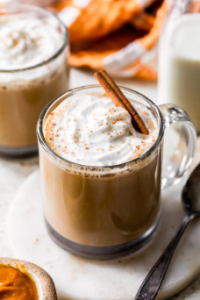
Every year, once fall comes around, fall drinks featuring pumpkin become trendy again. But have you really tasted a pumpkin spice latte without all the harmful additives?
All you’ll need is espresso, milk, honey, cinnamon, ginger, nutmeg, cloves, vanilla, and pumpkin puree. Combine all your ingredients, then heat the espresso in a small saucepan over low heat, constantly whisking the mixture until steaming. Use a frother or handheld mixer until the mixture is light and foamy. Finally, pour your espresso into a mug and top it off with the foamy pumpkin froth. The perfect fall drink!
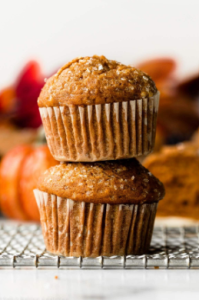
Pumpkin puree is the best ingredient to add to your basic recipes for a sweeter and healthier spin. You can use pumpkin puree in muffins.
All you’ll need for these delicious baked goods is flour, baking soda, cinnamon, ginger, pumpkin pie spice, pumpkin puree, oil, brown and white sugar, eggs, and milk. Start by combining wet and dry ingredients in two separate bowls. After both bowls of ingredients are combined well, add the dry into the wet and mix until you get a well-mixed, thick dough. Fill the muffin liner all the way to the top and bake at 350°F for 20-25 minutes. A baked good with a fall spin.
Ultimately, pumpkin is a versatile additive ingredient. It can be added easily to morning oats and yogurts, whisked into any pasta sauce or pancake batter to add a fall feeling to your life. Outside of the kitchen, pumpkins can be used for even more.
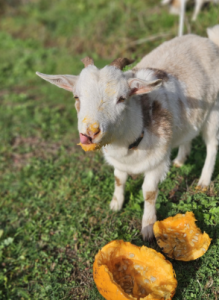
Unpainted, unbleached pumpkins rid of all metal and candles, can be donated to animal sanctuaries or zoos for animal feed. Many Ontario animal sanctuaries accept pumpkin donations; those farms being Shelby’s Ranch (Puslinch), Carroll’s Animal Sanctuary and Rescue (Hanover), Karuna Lane Sanctuary and Farm Stay (Mount Forest), and LockHeart Acres / Local Farm Sanctuary (Stroud / near Barrie).
Lots of farms like Sweet Acres Pigs Sanctuary (Whitchurch-Stouffville), Promised Land Animal Sanctuary (Campbellford), FrogHollow Farm Sanctuary (Princeton/near Woodstock), and Little Red Brick House Farm (Whitby) prefer uncarved pumpkins to avoid any possible foreign objects or coating material left behind. Pumpkins are a great source of nutrients for wildlife. Leaving natural pumpkins in your backyard or bird feeders is great for wildlife. Avoid dumping pumpkins in forests, as that is illegal littering.
Your pumpkin is also a great currency for the earth. You can bury pieces of pumpkin in your soil to enrich the soil with vitamins and potassium. Once the pumpkin starts to rot, it acts as a natural fertilizer for plants and supports microbes and earthworms. Burying pumpkin avoids anaerobic digestion that would otherwise occur in a landfill, where all trash is packed tightly in an oxygen-free environment, allowing oxygen-free-thriving bacteria to break down the pumpkin and release methane gas.
Pumpkins are more than Halloween decorations. Whether you turn them into food, donate them to animals, or use them as fertilizer, there are countless ways to use pumpkins post-Halloween.
SOURCES
Brooks, Jessica. “Pumpkin Pancakes, Poached Pears and More — Here’s What to Cook in October!” CBC, 4 Oct. 2018, https://www.cbc.ca/life/food/pumpkin-pancakes-poached-pears-and-more-here-s-what-to-cook-in-october-1.4850658.
Sally. “My Best Pumpkin Muffins Recipe.” Sally’s Baking Addiction, 14 Sept. 2022, https://sallysbakingaddiction.com/pumpkin-muffins-recipe/.