Written By: Hatim Dungrawala
Edited By: Arjun Singh
Designed By: Bianca Torres
Published By: Tanvi Jillella
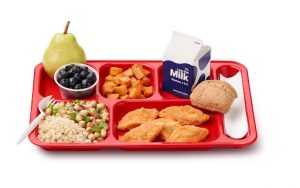
Across the entire world, whether it be the U.S., China, France and beyond, dozens of nations have implemented cafeteria lunches to support and empower students. While the intentions of this endeavour are positive and fulfilling, the execution remains highly varied amongst regions, leaving countless students with the craving for a better meal everyday. Numerous solutions exist to implement meals that are actually healthy, tasty, and cost-effective, and today we’ll be diving into the situation and how school boards worldwide can improve the lunches of their students.
Approximately 400 million children internationally are provided with food from school meal initiatives, with the goals being to increase regular participation while playing a beneficial role in every child’s development and health. Typically, the main factors that hinder the efficiency of these systems are finite financial resources; poor quality of food is a result proportional to lower funding, as fresh produce is harder to come by under such situations. When taking human resources into account, notably the staggering demand from students, this reduces the efficiency of staff. Improper cleaning practices, undercooked food, and other hazards source from the lack of time and the frenzy of students trying to get their meal.
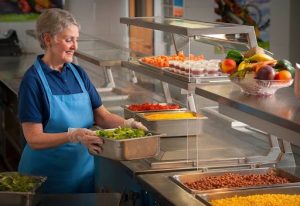
Furthermore, student bodies consist of a wide array of different ethnicities, cultures, and dietary preferences, supported by traditions, religious requirements, and similar influences. Combined with other factors, such as allergies, makes meal planning a challenging task where upholding cross-contamination procedures and arranging ingredients becomes vital for success. These challenges pose a huge issue to optimizing current cafeteria lunch systems and ensuring consistent effectiveness; solutions often remain highly expensive and time consuming to implement, often leading many to not take action on the problem.
When it comes to solutions, numerous ideas and concepts of varying strategy and approaches could help solve this multifaceted issue. Firstly, when it comes to safety hazards in regards to food, integrating automation and detection technology when it comes to temperature control can preserve ingredients during prolonged periods where supervision is nonexistent, e.g.(weekends, summer breaks, holidays).
Doing so allows for remote interconnectivity and direct access to the status of food storage, ensuring that less produce goes to waste and makes food operations leaner. Moreover, potentially outsourcing responsibilities to vetted specialists outside regional school boards could provide additional expertise and services that may lessen the burden on the current systems. Increased assistance for fluctuating meal volumes could be a result of outsourcing, and along with concrete roles and indicators, could provide more clarity and performance to meet regulatory guidelines while maintaining quality service.
Transitioning to scratch cooking and in-house operations will also allow schools to serve fresher meals to students. This approach limits the use of processed items and ingredients, automatically meals are more nutritional while also cutting back on food wastage. Such a transition would require proper equipment and staffing to be effective; several schools have been testing in-house cooking for several days in a week, and “speed-scratch” techniques that utilize pre-prepared ingredients e.g.(diced carrots) that maintain the essence of scratch cooking while also saving time. Staff investment would also go hand-in-hand with scratch cooking, and will likely be more productive and beneficial to cafeteria management provided they’re paid and treated sufficiently. Research proves that cost-effectiveness and quality are correlated to the enthusiasm and attitude of staff, highlighting the importance of human resources for effective solutions. Compensation and benefits, along with professional development will allow workers to remain skillful while consistently creating healthy meals for students.
In conclusion, school cafeteria lunches have mixed reviews worldwide, but remain a pivotal component to ensuring the overall health and engagement of students is optimal. Automation, outsourcing, and investments in staff and scratch cooking provide realistic pathways toward providing fresher, healthier meals for all students, allowing them to be successful in school. School lunches are not just another meal throughout the day; they are the lifeblood and fuel that keeps our future generations thriving and innovating, and going one step forward to supporting that vision will make all the difference.
References:
Bhavya. (2026, October 23). What is cafeteria management & why do enterprises outsource it? Bluspring. https://www.bluspring.com/blog/cafeteria-management-services/
How ‘ugly’ fruit and vegetables could tackle food waste and solve supermarket supply shortages. (2023, March 7). Queen Mary University of London. https://www.qmul.ac.uk/news/latest-news/2023/hss/how-ugly-fruit-and-vegetables-could-tackle-food-waste-and-solve-supermarket-supply-shortages.html
Mitchell, A., Wineman, A., Kessler, H., Warner, Y., Gharge, S., & Fredenberg, E. (2026). A comprehensive and standardized dataset on school feeding activities worldwide: The global survey of school meal programs. Data in Brief, 67, 113018. PubMed. https://doi.org/10.1016/j.dib.2026.113018
- (2026, January 17). School cafeteria monitoring: Food safety solutions 2026. Envigilance. https://envigilance.com/temperature-monitoring/school-cafeteria-monitoring/
Radojka Barycki. (2024, March 19). Protecting the innocent: Strategies for food safety in school cafeterias. FoodReady. https://foodready.ai/blog/food-safety-school-cafeterias/
rawpixel. (n.d.). Https://Www.Rawpixel.Com/Search/School%20cafeteria .
Strategies to Increase School Meal Consumption & Reduce Waste. (2026). Projectbread.Org. https://projectbread.org/strategies-to-increase-school-meal-consumption
U.S. Department of Agriculture. (2026, October 26). 20221028-FNS-RC-0005. 20221028-FNS-RC-0005 | A school lunch tray showing a reimbur… | Flickr. Flickr. https://www.flickr.com/photos/usdagov/52474644590