Written By: Irene Maneesh Mathew
Edited By: Arjun Singh
Designed By: Harneet Khurana
Published By: Valerie Belopolsky
What if a 30-second social media clip could change what farmers grow, what stores stock, and what millions of people eat?
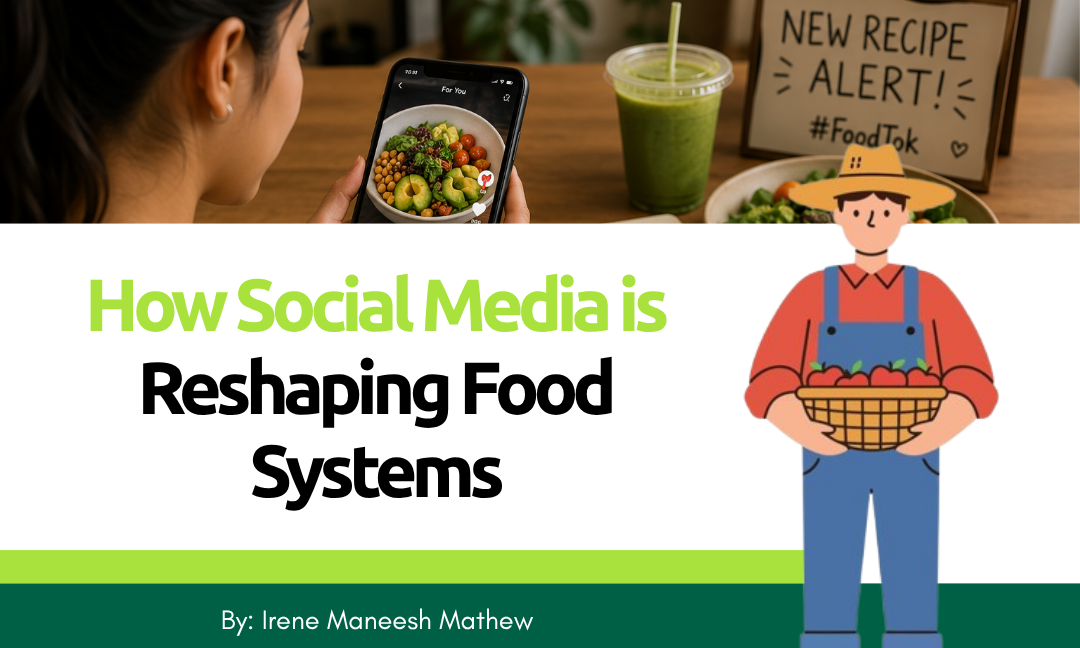
Today, social media is doing exactly that. Platforms such as TikTok, Instagram, and YouTube are no longer just places for entertainment. Instead, they have become powerful forces that influence food systems around the world. From viral recipes to food waste campaigns, social media is changing the way food is produced, marketed, consumed, and discussed. As a result, social media now plays an important role in nearly every stage of the modern food system.

One of the biggest ways social media influences food systems is through consumer demand. In the past, food trends were often created by restaurants, chefs, or food companies. Today anyone with a smartphone has the potential to start a global trend. A single recipe that goes viral can cause a sudden increase in demand for certain ingredients, influencing grocery stores and even supply chains. When millions of people see the same food trend online, they also often want to try it themselves. This creates changes in purchasing behavior and even affects food production. Farmers, manufacturers, and retailers may all adjust their decisions to keep up with these rapidly changing consumer preferences.
Social media has made food culture more visible than ever before. Young people are constantly exposed to cooking videos, restaurant reviews, nutrition advice, and food challenges. This exposure inspires people to experiment with new cuisines and ingredients from different cultures. As a result, food systems are becoming more connected globally, with consumers discovering foods they may never have encountered otherwise.
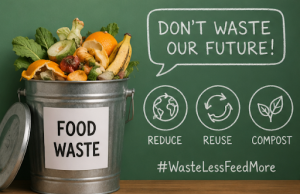
In addition to influencing what we eat, social media is also changing how we think about sustainability. Food waste, for example, has become a major topic online. Campaigns, influencers, and organizations use social media to share meal-planning tips, leftover recipes, and creative ways to reduce waste. Research has shown that social media can increase awareness of food waste issues and encourage more sustainable habits. By turning sustainability into a conversation rather than a lecture, these platforms help make environmental action feel more practical and achievable.
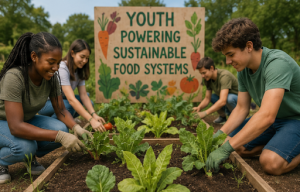
For youth, social media provides an opportunity to become active contributors in food systems rather than passive consumers. Young people use digital platforms to advocate for local food, support farmers, share community garden projects, and discuss food justice issues. These online communities allow young people to collaborate, exchange ideas, and inspire others to take action. The Food and Agriculture Organization (FAO) recognizes youth as key agents of change in transforming agri-food systems, and digital technologies are becoming important tools for that engagement.
Despite the good, social media’s influence is not always positive. The same platforms that spread useful information can also spread misinformation. Some viral nutrition trends promote unrealistic diets or health claims without scientific backing. In some cases, trends focus more on appearance and popularity than on nutrition, affordability, or sustainability. As consumers, young people need to think critically about the information they encounter online and verify claims using reliable sources.
Another concern is that social media often presents an idealized picture of food. Studies suggest that the foods people post online are not always what they actually eat. Attractive, trendy, or highly indulgent foods tend to receive more attention than everyday meals. This can create unrealistic expectations about healthy eating, cooking, and everyday food choices.
Overall, these challenges, social media has essentially transformed food systems by heightening awareness, increasing youth voices, and connecting consumers to food issues in new ways. A hashtag can start a conversation about food waste. Small online actions can inspire real-world changes in community businesses and even government policies related to food. A short video can introduce sustainable eating habits. A student can use a social media account to advocate for change in their school cafeteria.
Food systems are often described as the journey from farm to fork. Digital technology has become an essential link connecting producers, consumers and communities. Today, social media has become part of that journey. It influences what we buy, how we value and how we understand the food on our plates. As tech-savvy youth, young people are uniquely positioned to use these platforms not only to follow trends but also to help build a more sustainable, equitable and informed food system for the future.
References
Food and Agriculture Organization of the United Nations. The Status of Youth in Agrifood Systems. Food and Agriculture Organization of the United Nations,
https://www.fao.org/newsroom/detail/the-status-of-youth-in-agrifood-systems–new-fao-report-shines-light-on-pitfalls-and-prospects-for-1.3-billion-young-people/en.
Gligorić, Kristina, et al. Biased Bytes: On the Validity of Estimating Food Consumption from Digital Traces. arXiv, https://arxiv.org/abs/2208.14401.
Journal of Cleaner Production. “Exploring the Application of Social Media in Food Waste Campaigns and Interventions.” ScienceDirect, https://www.sciencedirect.com/science/article/pii/S0959652622016754.
MDPI. “The Influence of Social Media Platforms on Promoting Sustainable Consumption in the Food Industry.” Sustainability, vol. 17, no. 13, 2025,
https://www.mdpi.com/2071-1050/17/13/5960.
World Resources Institute. “How Can We Make Food Waste Socially Unacceptable?” World Resources Institute, https://www.wri.org/insights/shifting-social-norms-food-waste.