Written By: Prakhar Sood
Edited By: Arjun Singh
Designed By: Andria Sahar
Published By: Mannat Malhan
The morning light filtered through the curtains as it gleamed across Prakhar’s wide awake face. While often a late riser, needing much more than a visual cue to wake up on any middling day. Today was different– it was the day for his much-awaited final French exam. The ongoing worry had kept him up all night, one which he could not shrug off even until now. To make matters worse, the lack of sleep stabbed at him like a sharpened knife, as he struggled to recall even the baseline verb conjugations. Prakhar dragged himself out of bed and stared blankly at the kitchen counter – a Monster and a chocolate bar. A provoking voice pushed him to capitalize on the treats, one which would ease him in a matter of seconds. One that would jumpstart his train of thought. Prakhar reached out, unable to contain his excitement. Yet, he paused anyway.
The counterpunching voice of his gym teacher rang warning bells in his mind, “Remember, students, foods that nitro boost your performance almost always come crashing down.”
Prakhar contemplated the lasting effect of sugar. Just how long would it keep him up? A performance crash during an ongoing exam exceeded even his unprecedented levels of risk, especially in a matter of pass or fail.
Ding.
He slipped his hand into his pocket, reaching out for the buzzing phone. A headline in bold letters topped the notifications: Fuel Your Focus: The Ultimate Guide to Brain Food. Prakhar felt a faint grin tugging at the corners of his mouth, and he clicked on the article. Maybe quick boosts of sugar weren’t the only option in fueling his focus.

The Fuel: Sustaining Blood Sugar
The term glucose is often associated with photosynthesis. Interestingly, it is a mainstay in the human body, being the primary source of fuel for our brain. Complex carbohydrates must first be transformed, but require a sequence of bodily functions for the conversion into glucose. Sugar’s entry into our bloodstream marks the start of a dispatching mission for the blood cells, which embody trucks.
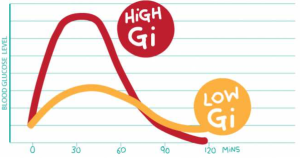
Each of these “trucks” travels a series of highways to unload glucose at one of the millions of tiny warehouses called cells. Fortunately, each warehouse is monitored by guards known as insulin, monitoring consumption and capacity. Insulin excels at its job when glucose arrives at a modest rate, typically from foods classified under the label of low glycemic index.
Conversely, glucose from foods like white bread and donuts enters the bloodstream fast, leading to mass congestion and traffic around each warehouse. Unprepared for such circumstances, it triggers a large insulin release, opening each door of the warehouse to the public. In a flash, the highway goes completely empty. Not a single fuel truck is present on the road. The abrupt desolation sends all warehouses into an emergency starvation procedure, performing the following measures:
- The False Alarm (Jitters): Realizing the absence of trucks on the road, the guards raise an emergency siren (adrenaline), causing shakiness and raising anxiety.
- The Bleak Library (Brain fog): Certain neuron warehouses exhaust fuel faster, leading to dizziness and confusion.
- The Immediate Callbacks (Cravings): Warehouse guards ask for more fuel trucks on the road as a result of the brain’s craving for immediate sugar.
To offset these emergency measures, you should exercise caution when indulging in highly glycemic foods as a morning habit. We encourage foods which maintain mental stamina. Skim the following table to gain a distinguishable understanding of both categories.
|
High Glycemic Index (Energy Crash) |
Low Glycemic Index (Energy Buildup) |
| Sugary Snacks and Beverages (cakes, doughnuts, candies, sweets, etc.) | Intact Whole Grains (wild rice, quinoa, steel-cut oats) |
| Breakfast Cereals (instant oatmeal, sweetened packaged brands) | Non-Starchy Vegetables (leafy greens, salad staples) |
| Grains and Bread (white bread, pretzels, rice crackers) | Legumes and Pulses (lentils, beans, peas) |
| Certain Fruits and Vegetables (pineapples, sweet potato) | Most Fruits (berries, apples, pears) |
Note:
Low Glycemic Index: Foods that allow the body to digest carbohydrates slowly, providing stable energy.
High Glycemic Index: Foods that become glucose quickly, spiking blood sugar levels. Must be consumed in balance with other nutritional foods rich in protein or fibre.
The Focus: Brain Development and Anatomy
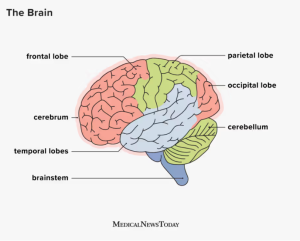
Your brain cannot endlessly run on mere fuel without needing the occasional software update. Adding to the partially filled plate, update installation foods are those that promote brain development and strengthen certain sections in the think tank. Much like a computer that functions through a combination of several parts, the brain is divided into regions for their own responsibilities.
The prefrontal cortex acts as the control center accountable for decision-making and focus. The hippocampus stores and organizes new memories, while the cerebellum coordinates movement and applies learned concepts. Keeping these portions healthy and providing momentary updates are just as important as supplying them with constant fuel.
Interestingly, 60% of the brain’s structure is composed of fats. Notably, these fats are not open to consumption when hungry, rather functioning as the fundamental building blocks for the central nervous system. The Omegas 3 and 6 are critical to these fatty anatomical structures. For instance, half of the brain’s fat goes into producing myelin, a thick, fatty coating which wraps around nerve fibres like rubber on an electric wire. Omega 3s keep this insulation intact so signals can travel much more efficiently!
In contrast, trans and saturated fats impact much more than just our physical health, but also deter cognitive performance. Trans fats serve as the mirroring opposite of the Omegas, increasing inflammation in the cell membranes which were previously strengthened.
Furthermore, they spark brain inflammation, which lowers the release of key feel-good chemicals like serotonin. Saturated fats only add to the damage, clogging blood vessels and effectively opposing a low glycemic fuel source. Future outlook does not impress either, as damaged blood supply raises the long-term risk of stroke and Alzheimer’s disease. Standard industry milk chocolate, often found lying on your countertop, hint hint, is packed with saturated fats, which lowers cognitive function over time.
Prakhar can truly enhance his focus today by ditching the heavily processed candy bar and embracing the wide variety of omega-rich foods such as salmon, walnuts, flaxseeds, or chia seeds. The French vocabulary is sure to stick.
The Memory: A Final Drizzle
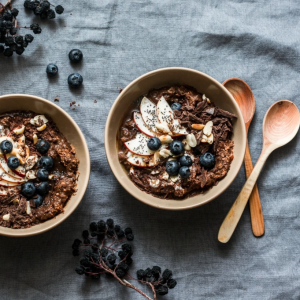
Reinforce the French terms with the final drizzle of finely chosen dark chocolate and blueberries; the heavyweights which anchor memory and recall by enhancing blood flow to the brain. Keep in mind, dark chocolate affects the body differently from processed candy bars, due to its composition of polyphenol antioxidants. These antioxidants widen blood vessels, delivering more oxygen and glucose to memory centers. Furthermore, they serve as the directly opposing force to plaque buildup around neurons that causes memory loss.
Prakhar switched off his phone and stared blankly at the Monster and candy bar. They remained untouched. Instead, he picked out a bowl of oatmeal, sprinkled in some blueberries, and topped it with a finely cut square of dark chocolate. He was ready to ace that French exam.
Sources:
Harvard Medical School. (2024). Foods linked to better brainpower. In Harvard Health.
Dark chocolate is best choice for health—But don’t turn it into medicine | Harvard T.H. Chan School of Public Health. (2024). In Harvard T.H. Chan School of Public Health. HSPH.
What to eat before an exam – UBC Okanagan Food Services. (n.d.). Retrieved August 5, 2026.
Robinovitz, J. (2023). Brain food: 5 Best Foods to eat before a test – score at the top.