Written By: Irene Mathew
Edited By: Ocean Croft
Designed By: Polina
Published By: Polina
Food is something everyone needs to survive, and yet millions of people around the world still struggle to access healthy, affordable, and nutritious meals. Yes, the grocery stores may seem full of food, unfortunately, not everyone has the same opportunities to buy or grow the food they need. This issue is known as food justice, and it has become an important part of discussions about improving food systems. Today, young people are raising their voices and taking action to make sure everyone has equal access to healthy food, regardless of where they live or how much money they earn.
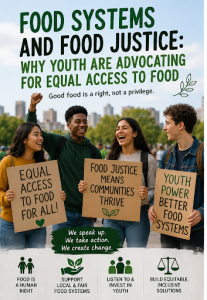 A food system includes everything involved in getting food from the farms to our plates. It covers various processes like growing crops, raising livestock, processing food, transporting it, selling it, eating it, and managing food waste. A strong food system should provide enough safe, nutritious, and affordable food for everyone while protecting the environment and supporting farmers. However, many food systems around the world still have inequalities that make it difficult for some communities to access healthy food.
Food justice focuses on equal fairness in the food system. Factors such as income, race, geography, and social inequality can affect a person’s ability to obtain nutritious food. In many cities, some neighbourhoods have very few grocery stores that sell fresh fruits and vegetables. These areas are sometimes called “food deserts”. A food desert is a geographic area where residents have little to no convenient access to affordable, fresh, and nutritious food. This forces families to make difficult choices between buying food and paying for other basic needs.
Climate change has made these challenges even greater. Extreme weather events such as floods, droughts, and heat waves reduce crop production and increase food prices. As food becomes more expensive, it is the low-income families that often face the greatest difficulties. According to the Food and Agriculture Organization (FAO), climate change is one of the biggest threats to global food security because it affects both food production and availability (FAO, 2023).
Young people understand that these issues will shape the future that they inherit. Around the world, youth are becoming leaders in food justice by volunteering at food banks, supporting community gardens, organizing food drives, and promoting sustainable farming practices. Many students are also encouraging schools to provide healthier meal options, reduce food waste, and purchase food from local farmers whenever possible.
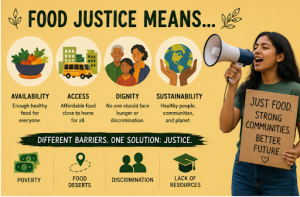
Social media has become a powerful tool for youth advocacy. Platforms such as Instagram, TikTok, and YouTube allow young activists to educate others about food insecurity, sustainable agriculture, and policies that promote equal access to food. By sharing stories, creating campaigns, and encouraging community action, young people are helping more individuals understand why food justice matters.
Schools also play an important role in creating a fairer food system. School gardens allow students to learn where food comes from while developing gardening skills and environmental awareness. Nutrition education teaches young people how to make healthier food choices, while food donation programs help reduce waste by redirecting surplus food to people who need it. These small actions can create meaningful change within local communities.
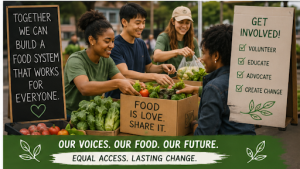 Governments, businesses, farmers, and community organizations also have responsibilities in improving food justice. Policies that support affordable healthy food, stronger local food systems, and sustainable farming practices can reduce food inequality. However, lasting progress requires collaboration. Youth voices should be included in this decision-making process because they bring fresh ideas, creativity, and a strong commitment to building a more sustainable future.
Food justice is not just about simply having enough food, it is about ensuring that everyone has the opportunity to access healthy, culturally appropriate, and affordable meals. Young people are proving that age does not limit the ability to create change. Through education, advocacy, volunteering, and community involvement, youth are helping build food systems that are more inclusive, resilient, and sustainable.
As the next generation of leaders, today’s youth have the opportunity to shape food systems that leave no one behind. By speaking up, supporting local initiatives, and encouraging fair policies, they are showing that equal access to food is not just an idea, it is a goal worth working towards for communities all throughout the world.
References
Food and Agriculture Organization of the United Nations. (2023). The State of Food Security and Nutrition in the World 2023. https://www.fao.org/publications/fao-flagship-publications/the-state-of-food-security-and-nutrition-in-the-world/en. Accessed July 23, 2026.
Food and Agriculture Organization of the United Nations. (n.d.). Food systems. https://www.fao.org/food-systems/en. Accessed July 23, 2026.
United Nations. (2026). Sustainable Development Goal 2: Zero Hunger. https://sdgs.un.org/goals/goal2. Accessed July 24, 2026.
World Health Organization. (2024). Healthy diet. https://www.who.int/news-room/fact-sheets/detail/healthy-diet. Accessed July 24, 2026.