Written By: Soham Parmar
Edited By: Mannat Malhan
Designed By: Polina
Published By: Polina
Have you ever wondered how your favourite chips, cereal, drinks, or frozen foods are made? It might seem like food just goes from a farm or factory to the grocery store, but there is a lot of science behind it. Food scientists are the people who use science to help develop, improve, test, and keep our food safe. Their work affects almost everything we eat, even if we never see them doing it.
What Does a Food Scientist Do?
A food scientist studies food using different areas of science, including chemistry, biology, microbiology, and nutrition. Their job can involve much more than simply testing whether something tastes good. Food scientists can help create new food products, improve existing ones, make food last longer, and make sure it is safe to eat.
 For example, a food scientist might experiment with different ingredients to improve the taste or texture of a product. They could also test how long a food can stay fresh or find a way to make a product healthier. If a company wants to create a new snack, drink, or frozen meal, food scientists can be involved in developing and testing the product before it reaches stores.
Food scientists also conduct experiments to understand how food changes during processing, cooking, and storage. They can study microorganisms to help prevent foodborne illnesses and test products to make sure they meet safety and quality standards. They may also work with preservation methods such as freezing, drying, canning, or pasteurization to extend a food’s shelf life.
Their work can also involve packaging and production. A food scientist might help find packaging that protects a product or develop a more efficient way to manufacture it. They can work on improving the nutritional value of food, reducing waste, and creating new products such as plant-based or gluten-free foods.
Why Are Food Scientists Important?
Food scientist are important because they help make sure the food that we eat it safe, nutritious, good quality, and enjoyable. Their work covers almost the entire journey of food, from when ingredients are produced to when the finished product reaches the grocery store. They study how food changes during processing, storage, and preparation and find ways to prevent food from becoming unsafe or losing its quality.
Food scientists also help solve some of the challenges facing our food system. As the population grows and people’s needs change, there is a greater need for food that is convenient, nutritious, sustainable, and able to last longer. For example, food scientists can work on plant-based meat alternatives, gluten-free foods, protein products, and convenient meals.
What Is Their Work Actually Like?
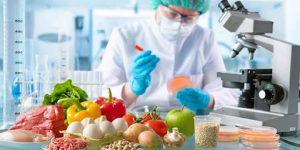 Being a food scientist does not mean spending all day cooking. FoodGrads explains that food scientists are not chefs. Instead, they use science to research, test, and improve food products. There are also many different areas they can specialize in, including research and development, food quality assurance, food quality control, food microbiology, food safety, product development, and regulatory compliance.
Depending on their job, food scientists might work in a laboratory, office, food-processing facility, or even on a farm. They can conduct experiments, analyze food samples, check ingredients, study microorganisms, test products, and make sure companies are following food safety rules. Some also work with packaging, preservation, and storage to help food stay safe and fresh for longer.
How Much Do Food Scientists Make?
The salary of a food scientist depends on their experience, education, location, and specific job. In Canada, the Government of Canada’s Job Bank reports a median wage of $40.00 per hour for food products scientists. The national range is about $25.71 to $66.67 per hour. In Ontario, the median is also $40.00 per hour.
Statistic: At $40 per hour, working 40 hours a week for 52 weeks would equal about $83,200 per year before taxes. This is a calculation based on the Job Bank’s median hourly wage, not a guaranteed salary.

How Do You Become a Food Scienitst?
If this career sounds interesting, the usual starting point is a bachelor’s degree in food science or a related science such as biology, chemistry, or biochemistry. Courses can include food processing, food analysis nutrition, microbiology, and food safety.
Getting practical experience is also important. Internships can give students hands-on experience with laboratory equipment and show them what working in the food industry is actually like. After a bachelor’s degree, some people start working right away, while others continue with a postgraduate diploma, master’s degree, or doctorate. Higher education can be especially useful for people who want to move into advanced research or specialized positions.
Food scientists also need skills beyond science. Research, observation, analysis, problem-solving, communication, teamwork, and technology skills are all useful in this career. Since scientists need to record their findings and explain their work to other people, being able to communicate clearly is especially important.
Could Food Science Be Right for You?
Food science could be great career for someone who enjoys science, experimenting, problem-solving, and food. You don’t have to be interested in becoming a chef. Instead, you could be interested in discovering how food works and using science to make it safer, healthier, tastier, or more sustainable.
What makes this career interesting is how many pathways are available. You could work in research and development, food safety, quality control, nutrition, microbiology, product development, or regulatory work. FoodGrads even describes food science as a field with hundreds of specialized areas, meaning you may not know your favourite area until you actually gain some experience.
So, the next time you grab your favourite snack or drink from the grocery store, remember that there is a lot more behind it than you might think. Food scientists are using science every day to help bring safer, better, and more innovative food from the farm and laboratory to our plates.
Resources:
- Team, I. E. (n.d.). What does a food scientist do? (and how to become one) | indeed.com. What Does a Food Scientist Do? (And How To Become One). https://www.indeed.com/career-advice/finding-a-job/what-does-food-scientist-do
- Geremia, A. (n.d.). What does a food scientist do?. What does a Food Scientist do? https://www.centennialcollege.ca/school-of-engineering-technology-and-applied-science-blog/2019/july/17/what-does-a-food-scientist-do
- Cargill. (2025, January 25). What is a food scientist? A day in the life at Cargill. What is a food scientist? A day in the life. https://www.cargill.com/story/what-is-a-food-scientist
- Edwards, S. C. (2023, February 22). What does a food scientist actually do in the food industry. What does a Food Scientist actually do in the Food Industry. https://foodgrads.com/2018/10/19/im-a-food-scientist-and-heres-what-i-really-do/
- Innopharma education . (2024, September 27). What does a food scientist do?: A complete career guide. Innopharma Education. https://www.innopharmaeducation.com/blog/what-does-a-food-scientist-do-a-complete-career-guide