Written By: Aryan Bharucha
Edited By: Tanvi Jillella
Designed By: Jedrick Asuncion
Published By: Valerie Belopolsky
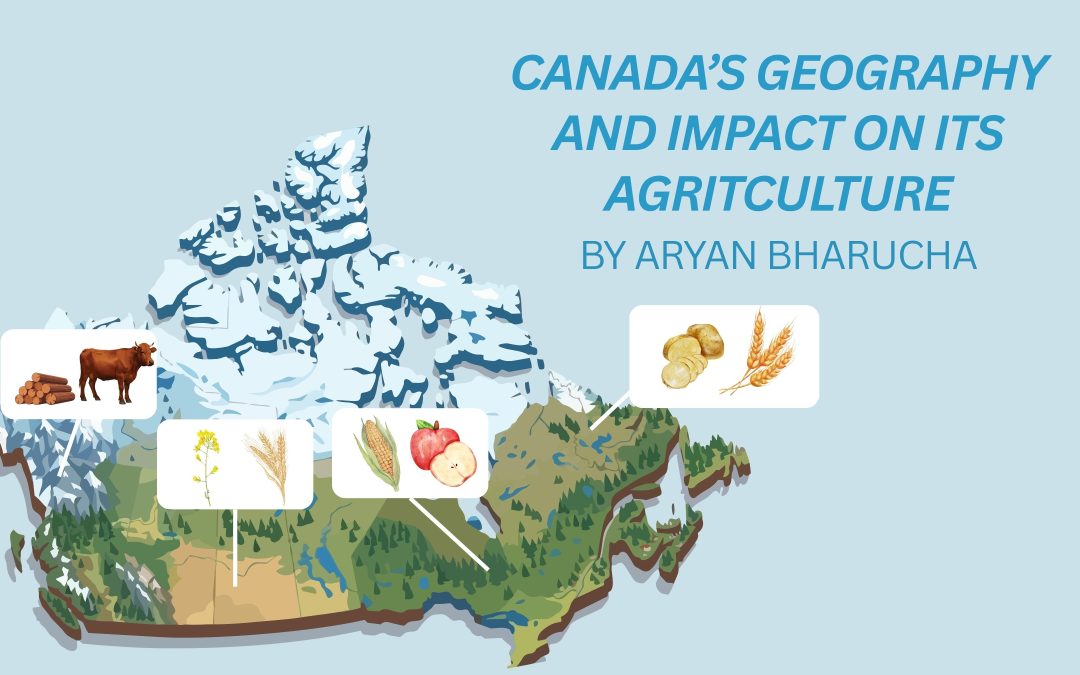
We’ve all seen the vast, sweeping maps of Canada, but have you ever wondered how its diverse landscapes directly shape the food on our plates? The reality is that Canada is the second-largest country in the world, yet only about 7% of its total land area is suitable for farming. Vast expanses of rock, permafrost, and mountains create major challenges for growers, making geography the ultimate factor in where and how crops can thrive. Let’s take a look at how key geographic factors dictate farming across the nation and where Canada’s agricultural hotspots are located!
Key Geographic Factors Shaping Agriculture
You can understand how geography limits or helps farming by looking at these three elements: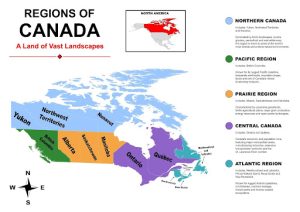
- Climate and Growing Seasons: Harsh, cold winters and short frost-free periods restrict large-scale farming to southern regions where temperatures are milder.
- Soil Quality: Rich, nutrient-dense soils support abundant crop yields, whereas the thin, rocky soil of regions like the Canadian Shield makes traditional crop production nearly impossible.
- Topography and Water: Flat plains allow for massive machinery and easy cultivation, while nearby freshwater sources (like the Great Lakes) provide essential irrigation.
Major Agricultural Regions
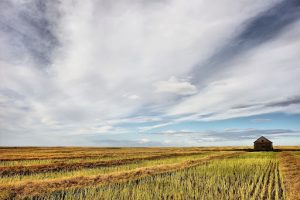 The Prairie Provinces (Alberta, Saskatchewan, Manitoba): Known as Canada’s breadbasket, this flat Interior Plain features rich, dark soils (chernozems) ideal for huge fields of wheat, barley, and canola.
- Southern Ontario and Quebec (St. Lawrence Lowlands): A warmer climate, longer growing season, and fertile loamy soil allow farmers to grow a wide variety of crops, including fruits, vegetables, corn, and soybeans.
- The Atlantic & Mountain Regions: Pockets of fertile land such as Prince Edward Island’s famous red, sandy soil excel at specific crops like potatoes, while rugged mountain terrains elsewhere focus on forestry and livestock pasture
There you have it! You have learned how Canada’s varied geography impacts what can be grown and where. Understanding these geographic dynamics gives you a clearer perspective on Canada’s food production, showing how vital climate, soil, and land terrain are to keeping the agricultural industry moving forward.
Work Cited
Resources
Agriculture and Agri-Food Canada. (n.d.). Our home and native land: Significant agricultural soils across Canada. Government of Canada. https://agriculture.canada.ca/en/agricultural-production/soil-and-land/our-home-and-native-land-significant-agricultural-soils-across-canad
ClimateData.ca. (n.d.). Agriculture module overview. https://climatedata.ca/agriculture-module-overview/
Seeds of Diversity Canada. (n.d.). Canada’s geography and its impact on agriculture. School Food Gardens. https://seeds.ca/schoolfoodgardens/canadas-geography-and-its-impact-on-agriculture/
Image Credit
Getty Images. (n.d.). Chris Graham [Photographs]. https://www.gettyimages.ca/photos/chris-graham