
Written By: Mannat Malhan
Edited By: Hatim Dungrawala
Designed By: Polina
Published By: Polina
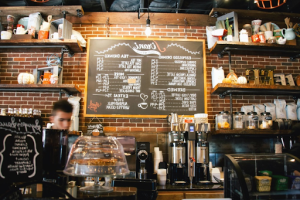
“A cup of coffee” has become one of the simplest symbols of everyday life. It helps with early mornings, conversations, and offers a moment of comfort during busy days. Yet many people have noticed that the price of that familiar latte or cappuccino has steadily increased over the past few years. While inflation is the first thought, the story behind rising café prices extends way beyond the cash register. Every cup of coffee reflects a complex global food system that spans small farms in tropical regions to international shipping routes, roasting facilities, wholesalers, and, finally, local cafés. Climate change, supply chain disruptions, labour shortages, and transportation costs throughout the coffee industry have combined to make coffee more expensive than ever.
 Coffee begins its journey thousands of kilometres away from the average Canadian café. Unlike wheat or corn, coffee can only be grown in a narrow band around the equator known as the “Coffee Belt” where countries such as Brazil, Vietnam, Colombia, Ethiopia, and Indonesia produce the majority of the world’s supply. Because production is concentrated in relatively few regions, the global coffee market is highly vulnerable to environmental disruptions. According to the Food and Agriculture Organization (FAO), world coffee prices increased by nearly 39% in 2024, largely because severe droughts, excessive rainfall, and unusually high temperatures reduced harvests in major producing countries. Climate change has become one of the greatest threats to coffee production. Coffee plants are highly sensitive to temperature and rainfall, which require very specific growing conditions. Brazil, the world’s largest coffee producer, experienced severe drought followed by damaging heat, which reduced expected harvests. Vietnam, the leading producer of Robusta coffee, also faced prolonged droughts that significantly lowered production. Indonesia suffered excessive rainfall that damaged coffee cherries before harvest (FAO, 2025). As these weather events become more frequent and even more severe, global coffee supplies become less predictable, creating shortages that push prices upward long before coffee reaches consumers.
However, weather alone doesn’t explain why café prices continue to climb. Coffee travels through one of the most extensive international supply chains in the food industry. After harvesting, beans have to be processed, transported, shipped across oceans, roasted, packaged, distributed to wholesalers, and finally delivered to cafés. 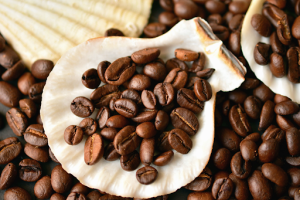 Each stage introduces additional costs. Global shipping distributions over the past several years, including higher fuel prices and container shortages, have increased transportation expenses. The FAO identifies rising shipping costs as one of the major contributors to today’s record coffee prices. Even though coffee beans themselves may account for only part of a drink’s final cost, rising prices throughout the supply chain accumulate before reaching consumers. The food system also reveals a surprising contradiction: although coffee prices have reached record highs, many coffee farmers still struggle to earn a sustainable income. Around 80% of the world’s coffee is grown by smallholder farmers, many of whom cultivate only a few hectares of land (FAO, 2025). While international coffee prices fluctuate, farmers receive only a small fraction of what consumers ultimately pay for a cup of coffee. According to the FAO, coffee production generates more than $200 billion annually across the global industry, yet much of this money is taken by processors, exporters, roasters, retailers, and cafés rather than by producers themselves. This imbalance shows a significant weakness within the food system: rising consumer prices don’t necessarily translate into better livelihoods for those growing the crop.
Hidden costs within the coffee supply chain extend beyond economics. Modern food systems often fail to account for environmental degradation, biodiversity loss, water consumption, and social challenges such as poverty and unequal wages. 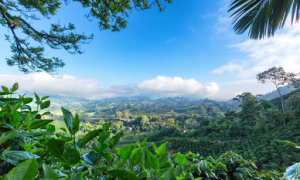 A 2024 FAO study examining coffee production in Eastern Africa found that many environmental and social costs remain “hidden” because they’re not reflected in market prices. These include the impacts of climate change, water use, gender inequality, and the gap between farmers’ incomes and what is needed to maintain a decent standard of living. Researchers argue that today’s coffee prices still underestimate the true cost of producing coffee sustainably. Ironically, consumers may feel coffee has become expensive, yet its price still fails to include many of its real hidden costs. Local cafés also face financial pressures unrelated to coffee beans themselves. Independent cafés must pay higher wages, increased rent, more expensive utilities, rising insurance premiums, and higher prices for essentials such as milk, paper cups, lids, syrups, and packaging. Inflation has affected nearly every operating expense. Unlike large international chains that purchase coffee through long-term contracts and negotiate lower prices because of their scale, smaller cafés have fewer opportunities to absorb these increases. As profit margins shrink, businesses are often forced to raise drink prices simply to remain financially stable. In many cases, café owners are not increasing prices to earn greater profits but rather to offset rapidly growing operating costs. Looking ahead, the future of coffee prices will depend largely on the resilience of the global food system. Experts argue that investing in climate-resilient farming methods, improved irrigation, disease-resistant coffee varieties, and fairer compensation for farmers will strengthen long-term supply while reducing future price increases. The FAO emphasizes that greater investment in research, technology, and sustainable farming practices is essential as climate change continues to reshape coffee production worldwide. Although these investments may initially increase production costs, they could create a more stable and equitable food system capable of meeting growing global demand.
Ultimately, the rising price of coffee is about far more than inflation or café markups. Every cup reflects a global network of farmers, transport companies, processors, retailers, and consumers whose livelihoods are increasingly shaped by climate change, economic inequality, and fragile supply chains. What seems like a simple purchase at the café counter is actually the final step in one of the world’s most interconnected food systems. As the weather becomes less predictable and production challenges grow, coffee serves as a reminder that the price of food often reflects much more than the product itself. The next time a latte costs a dollar more than expected, it may not simply be the café charging extra, but showing the path of coffee from farm to cup.
FAO. (2025, March 14). Adverse climatic conditions drive coffee prices to the highest level in years.
Kelemu Dessie Massrie. (2025). Why is the price of coffee rising globally? Future prospects for Ethiopian coffee. Frontiers in Sustainable Food Systems, 9.
Adong, A., Kornher, L., Chichaibelu, B., & Arslan, A. (2026, January 4). The Hidden Costs of Coffee Production in the Eastern African Value Chains. ResearchGate; Sustainable Development.
FAO: Coffee production down brings prices up to all-time high. (2025). MercoPress.
FAO. 2018. The future of food and agriculture – Alternative pathways to 2050. Summary version. Rome. 60 pp.