

Written By: Arjun Singh
Edited By: Ayman Anas Khan
Designed By: Ayman Anas Khan
Published By: Ayman Anas Khan
Have you ever wondered how a banana grown in Ecuador or an avocado from Mexico can arrive at your local grocery store perfectly ripe and ready to eat? The secret to this isn’t magic, but a precisely controlled system known as the commercial ripening rooms.
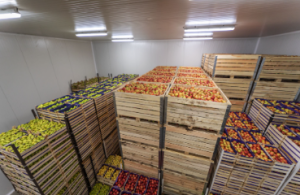
Furthermore, without these specialized facilities, our modern, globally connected food system simply wouldn’t work or be very difficult and impractical. Here is a look at the science of induced ripening and how these rooms act as the beating heart of the global produce supply chain
A ripening room is far from just a “hot room with gas”, it is a highly controlled, and sealed environment designed to mimic and accelerate a fruit’s natural maturation process. Moreover, ripening rooms are used primarily for climatic fruits such as bananas, avocados, and mangoes which can be harvested when they are mature but still green and ripened later. Allowing them to be transported long distances before ripening is triggered closer to the consumer.
To pull this off, the room manages a delicate symphony of five precise variables:
First, ethylene is a naturally occurring plant hormone that triggers the ripening process, when green fruits arrive at the facility, operators inject a precise dose of ethylene gas into starting its final biological push: converting hard starches into sweet sugars, softening the flesh, and changing the peel’s colour.
Next, temperature dictates the speed of the process. While standard cold storage keeps fruits dormant at around 13-14 degrees C to prevent them from ripening during transit, a ripening room nudges the temperature up 15-20 degrees C. Thus, the room’s sensors don’t just track the air, they monitor the internal pulp temperature of the fruit to ensure the entire pallet is warming evenly.
If you just heated a room, the fruit would shrivel up and dehydrate. Bananas and avocados are usually ripening at a staggering 85% to 95% relative humidity. This high moisture level prevents weight loss, keeps the peel from scaring, and ensures the fruit looks plump and fresh when it hits the shelf.
If you pack thousands of boxes of fruit into a room, the center boxes will naturally stay cooler and recessive less gas than the outer ones. Ripening rooms use powerful, forced-air circulation systems to push ethylene rich, temperature controlled air through every single ventilated carton. Without this, a single pallet would yield a mix of mushy and rock hard fruit.
As fruit ripen, they “breathe.” This means they take in oxygen and exhale carbon dioxide (co2) and heat. If CO2 Levels rise above 0.5%, it actually stalls the ripening effect of the ethylene. To prevent the fruit from suffocation itself, automated exhaust systems periodically vent the CO2 and pull in fresh oxygen.
Ripening rooms are an important part of the global food system because they help fruit travel to consumers across long distances. Fruits can be harvested while still green, transported through the cold chain, and ripened closer to where they will be sold. This allows countries like Canada to receive produce from places such as Ecuador and Mexico while still maintaining its quality and freshness. Without controlled ripening, transporting many fruits over such long distances would be much more difficult.
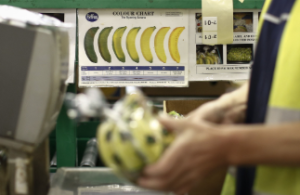
Ripening technology is the hero of the Global cold chain. By separating the harvesting of a fruit from the ripening of a fruit, we have reshaped agricultural economics at a fundamental level.
If bananas were left to ripen on the tree, they would split, rot and turn to mush before they ever reached a shipping port, let alone a foreign supermarket. By harvesting fruit while it is mature green and putting it to sleep in refrigerated ships, producers can safely transport delicate crops across oceans. Perhaps the ripening room acts as the “ waking up” point, perfectly timing the fruits peak to be delicious for when it arrives at a local distribution centre.
References:
Agriculture Institute. (n.d.). Ethylene treatment systems, techniques, and considerations. https://agriculture.institute/food-chemistry-and-physiology/ethylene-treatment-systems-techniques-considerations/
Catalytic Generators. (n.d.). Tips for ripening bananas with ethylene application. https://www.catalyticgenerators.com/banana-ripening
Felix Instruments. (n.d.). The ripening room resource. https://felixinstruments.com/blog/the-ripening-room-resource/
Frigomekanik. (n.d.). Banana ripening and maturation conditions. https://www.frigomekanik.com/en/blog/banana-ripening-and-maturation-conditions
HENGKO. (n.d.). Fruit ripening room technology & monitoring systems. https://www.hengko.com/news/fruit-ripening-room-technology-gas-and-temperature-humidity-monitoring-system/
MSA Safety. (n.d.). Ethylene monitoring for critical fruit and vegetable ripening. https://ca.msasafety.com/solution/fruit-ripening-ethylene?locale=en
Smart Fog. (n.d.). Mastering humidity control for optimal food ripening. https://www.smartfog.com/insights/humidity-control-food-ripening/