

Written by: Mannat Malhan
Edited by: Ish Modi
Designed by: Danujan Krishnakumar
Figs. They don’t usually get the spotlight because they’re not as popular as strawberries or bananas, and most people only think about them when they’re on a fancy cheese board. However, it has a way more interesting (and important) backstory. So, let’s talk about figs.
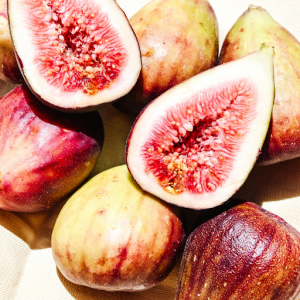 Figs grow on the Ficus tree, a massive plant family with over 800 species. The most common edible variety comes from the Ficus carica, also known as the common fig. But the twist is that a fig isn’t a fruit at all. It’s something called a synconium, a hollow fleshy structure with hundreds of tiny flowers inside of it. The little crunchy bits inside the fig are seeds formed from those internal flowers. They were cultivated in ancient civilizations like Ancient Egypt, Ancient Greece, and Ancient Rome.
 Figs have long carried symbolic meaning across them as well. The fig remains associated with fertility, peace, and prosperity. Greek writers sometimes referred to them as the “fruit of the philosophers,” while Egypt regarded figs as a divine gift and even buried royalty with baskets of them as offerings in the afterlife. In Roman mythology, the sacred fig tree known as the Ficus Ruminalis protected the twin brothers Romulus and Remus, who are celebrated as the legendary founders of Rome. Some scholars also suggest that the “forbidden fruit” in the Book of Genesis may have been a fig rather than an apple, supported by the text’s reference to fig leaves immediately afterwards. So, they’ve been around for thousands of years as nature’s candy.
Beyond their symbolic meaning, they are very ecologically important. They grow best in warm, dry climates with lots of sunshine in countries like Turkey, Egypt, and Morocco. Their trees can grow surprisingly large, 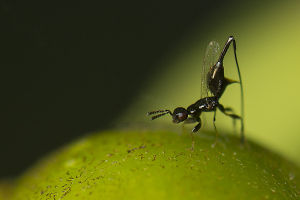 but they can also adapt well to smaller orchards and even backyard gardens. Most common figs don’t even need pollination to produce fruit, but some wild fig species rely on one of the most fascinating plant-animal partnerships in the world with the fig wasp. Each fig species has a specific wasp counterpart that enters the syconium to lay eggs, pollinating the flowers in the process. The wasp enters the fig to lay eggs, and in the process, pollinates the internal flowers. Because of this, figs are considered a keystone species in many tropical ecosystems, meaning they have a disproportionately large impact on their environment compared to their abundance. This is because fig trees often bloom multiple times a year, produce huge amounts of fruit, and feed many animals, such as birds and even insects. During seasons when other fruits are scarce, figs can be the main food source, keeping an ecosystem alive. No figs means fewer animals, and fewer animals lead t
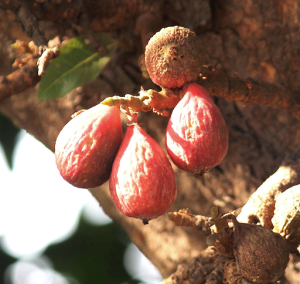 o a weaker ecosystem with less diversity. Alongside their ecosystem benefits, they’re a major export crop. They’re shelf-stable, transportable, and high in natural sugars, which makes them important for food security. Plus, because fig trees can thrive in marginal soils, they help diversify agricultural systems instead of relying on just one crop. In fragile food systems, diversity plays a key role, and figs can help contribute to that diversity.
So, that leads to the question of what you can make with figs. Short answer: a lot.
| Fresh Figs | Dried Figs |
| Tossed into salads with goat cheese | Energy bars/fig bars |
| Roasted with honey | Granola |
| Paired with proscuitto | Oatmeal |
| Baked into galettes or tarts | Yogurt bowls |
There’s also a cookie inspired by figs called the “Fig Newton,” so maybe you could try making that too!
 In the end, figs are a reminder that food is never just food. They’re the product of long histories, complex ecological relationships, and agricultural systems that connect cultures. A single fig helps link pollinating insects, forest animals, and thousands of years of human cultivation. So, while a fig may seem small, its impact is not. Understanding figs means understanding how tightly woven our food systems are with natural ecosystems, and how much we rely on species that often go unnoticed. Not too bad for something that can fit in the palm of your hand.
References
Das, D. (2025, August 15). History of Dried Figs: From Ancient Cultivation to a Modern Snack. Premium Spices. https://www.premiumspices.co.nz/blogs/news/history-of-dried-figs.
Fig Interest Group. (2026). Archive.org.
https://web.archive.org/web/20090410033353/http://www.nafex.org/figs.htm.
Harvard University. (2006, May 23). Tamed 11400 years ago, figs were likely the first domesticated crop.
Jake. (2021, July 20). The Fig: The Fruit of The Fall. Cutting the Gordian.
https://www.thegordianknot.org/post/the-fig-the-fruit-of-the-fall.
Public Affairs. (2016). The story of the fig and its wasp – Ecotone | News and Views on Ecological Science.
https://esa.org/esablog/2011/05/20/the-story-of-the-fig-and-its-wasp/.
The Historians’ Hut. (2025, October). The Sacred Ruminalis Fig Tree Of Ancient Rome.
https://thehistorianshut.com/2025/10/01/the-sacred-ruminalis-fig-tree-of-ancient-rome/.
Veberic, R., & Mikulic-Petkovsek, M. (2016). Phytochemical Composition of Common Fig ( Ficus carica L.) Cultivars. Nutritional Composition of Fruit Cultivars, 235–255. https://doi.org/10.1016/b978-0-12-408117-8.00011-8.