
Written by Aryan Bharucha
Edited by Mitchell Galbraith
Designed by Danujan Krishnakumar
The early morning air along the coast of Prince Edward Island is still cold in late April, but the docks are already bustling with life. Boats are being prepared, traps are stacked higher, and there is a quiet sense of excitement as spring arrives in full gear. This is because late April to early May marks the start of lobster season, one of the most important times of year for many coastal communities. For lobster fishers and seafood workers, it’s not just the beginning of their jobs, but the renewal of traditions that have been passed down for generations.
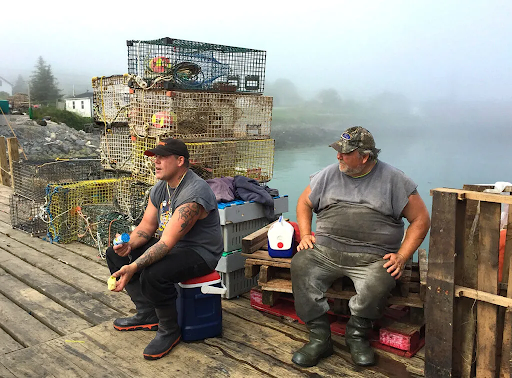
Lobster fishing is a major part of life on the Atlantic coast of Canada, especially in Prince Edward Island. The seafood industry plays a significant role in the local economy, as it supports thousands of jobs and helps small communities thrive. But beyond the economic importance, lobster fishing is deeply connected to the culture and heritage of the area. Many lobster fishers come from families that have worked on the water for decades. Skills such as setting traps, reading tides, and navigating the Atlantic Ocean are often learned at a young age and passed down through generations.
The start of the lobster season is carefully timed and prepared for. Opening in late April or early May allows the lobster population to remain sustainable and healthy, ensuring the supply of lobsters can remain at healthy levels. Lobster Fishers follow strict rules about trap limits, size requirements, and fishing zones to make sure lobster populations are protected for future generations. This balance between tradition and sustainability is a key part of what drives the industry throughout multiple economic events.
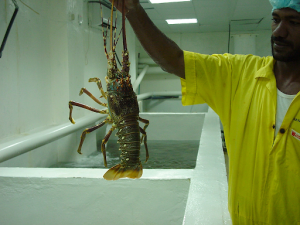
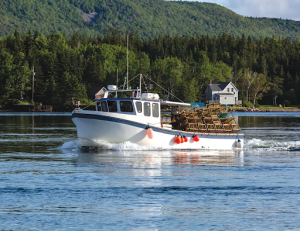 A typical day for lobster fishers starts early, often before sunrise. Lobster fishing boats, which have a flat-bottom and large deck to hold more traps, head out into the water, where traps are checked and hauled in from the previous day or even week. Each trap may hold a few lobsters, or even none, showing how important patience is for lobster trapping. Once the traps are pulled in, the lobsters are sorted based on their size and gender.
Smaller lobsters or those carrying eggs are carefully returned to the water to help maintain the population. The rest are then kept for the market, where they will eventually be shipped across Canada and around the globe.
 Despite its importance for the Canadian Maritimes, lobster fishing is not an easy job. It requires long hours, physical strength, and the ability to work in rapidly changing or sometimes harsh weather conditions. Cold water, strong winds, and rough waves are all part of the reality that lobster fishers face, sometimes even on a daily basis. Despite the challenging obstacles, many fishers continue the work because of their strong connection to the ocean and their traditions.
Lobster from Prince Edward Island is known for its quality, and has become an important symbol of Canadian seafood internationally. But behind every lobster is the work of people who rely on skills, experience, and respect for the ocean and its inhabitants. Their work supports local and even global communities, keeps traditions alive, and contributes to Canada’s and the global food system.
To conclude, lobster fishing in places such as Prince Edward Island is more than just catching seafood. It represents a lifestyle that is built on tradition, sustainability, and most of all, community. As each season begins in early to mid-spring, it serves as a reminder of how important these coastal industries are, not just economically, but culturally as well. Perhaps it also highlights how local food systems rely on the balance between human activity and natural resources, showing how the way we harvest and consume food can shape entire ecosystems. In this way, lobster fishing reflects a broader notion about sustainable practices and the connection between people, culture, and the food we depend on.
References
Government of Prince Edward Island. Statement by Minister of Fisheries, Tourism, Sport and Culture on spring lobster season. Government of Prince Edward Island. Retrieved from: https://www.princeedwardisland.ca/en/news/statement-by-minister-of-fisheries-tourism-sport-and-culture-on-spring-lobster-season. Accessed March 18, 2026.
Images:
Retrieved from: Down East Acadia – Link: https://downeastacadia.com/road-trips/waterfronts/
Retrieved from: Talk of the Town Allanta – Link:https://talkofthetownatlanta.com/about-atlanta-caterer-talk-of-the-town/andrew-in-the-field/