Written By: Hatim Dungrawala
Edited By: Mannat Malhan
Designed By: Armita
Published By: Valerie Belopolsky
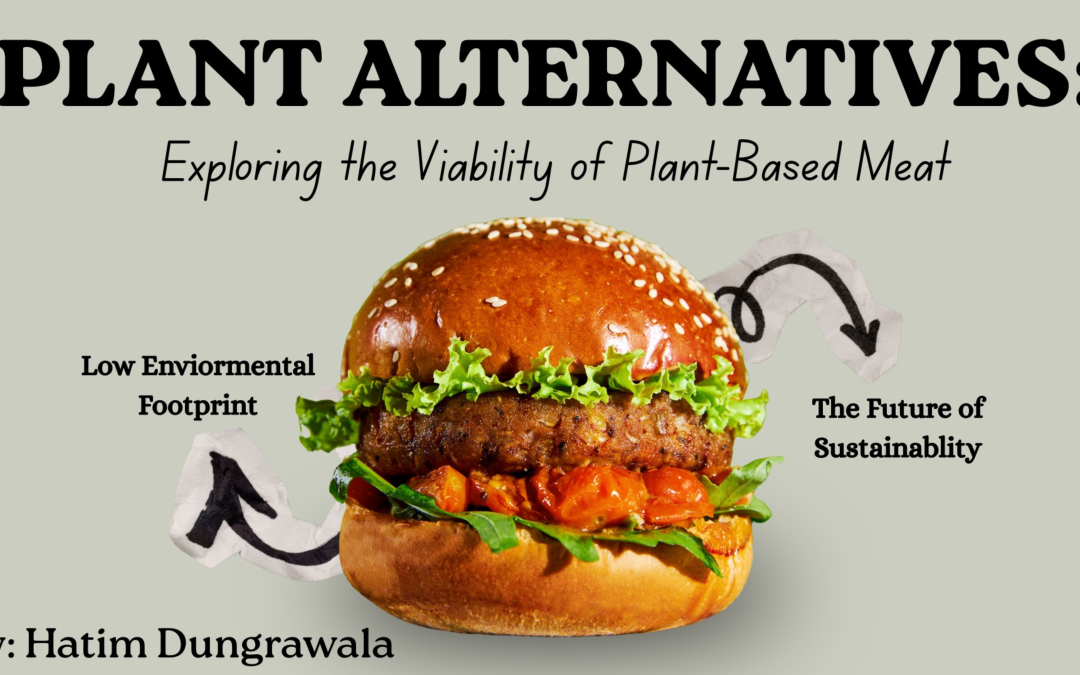
The advent of plant-based meat has been driving massive change in our society, as increasing vegan and vegetarian populations, agricultural strain, and environmental crises have spiked noticeable demand for a reliable, satiable substitution to conventional meat products. Combined with the advancement of agricultural technologies and the positive market sentiment towards this innovation, plant-based meat’s optimistic future is one that will revolutionize the meat industry.
Plant-based meat consists of substances that are sourced from plants, with their composition, taste, and other features intended to replicate traditional meat, with replications ranging from seafood to poultry. A common misconception in the definition of plant-based meat is its occasional use of fungi, but considering that fungi are not plants, this meaning isn’t entitled to full precision. The final substitute to meat is plant-based meat; however, it’s important to note that there is a differentiation between the components utilized to make plant-based meat, which includes textured vegetable protein (TVP), and a variety of concentrates and isolates, respectively. Additionally, fats and carbohydrates are among many other nutrients that are combined in plant-based meat, despite the prioritized substance for generation being protein.

The beginnings of plant-based meat originate from several decades ago, with some records and alternatives dating back even further. An amalgamation of gluten and water, prized for replicating both the aesthetics and feel of meat, named seitan, has been produced by communities since 900 BC to 600 AD, pioneering the creation of plant-based meat.
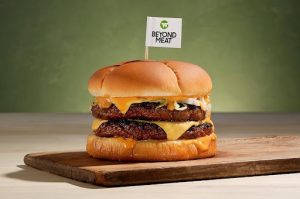
With the industry of biotechnology flourishing over the last few years, companies like Beyond Meat and Impossible Foods have successfully mass-produced meat alternatives, catering to markets worldwide. Before the giants of the current plant-based market, plant-based substitutes were lacklustre in terms of taste and texture, and were attempted by companies like Tofurky and Quorn. Fortunately, though, increased public tolerance and ameliorated sensory elements have been evident due to increased expenditure and progress made in the realm of food science, mitigating the lack of similarity existing in earlier versions of the product.
Expeditious growth of this budding division of the food industry has substantial potential in the near future. A report by market.us states that the valuation of this current market is approximately $9.2 billion dollars, with estimates suggesting a rapid increase to $35.1 billion by the year 2032. Along with a compound annual growth rate (CAGR) of 18.5%, these statistics and projections reinforce an optimistic outlook on the market.
Although these financial statistics are impressive for this relatively new market, customer sentiment towards the substitute shows otherwise. Traditional meat products remain the standard preference for individuals in nations worldwide, such as the United States, where 74% of participants chose animal protein rather than the latter, implying that more unique and customized approaches to marketing will have to be integrated in order to tap into the market.
Moreover, numerous nations have unknown or little customer approval of plant-based meat, posing a formidable issue to stakeholders. Combined with the limited amount of research conducted on customer preferences excluding the Western world, significant work and investment must be undertaken in order to put plant-based meat at the centre stage of the international market, while also changing the reputation and opinion of plant-based food in the minds of consumers.

With the negative impacts of climate change affecting our daily lives, plant-based meat is at the forefront of completely transforming the agricultural industry and the environment, although there are various perspectives on the social outlook on this topic. Individuals are searching for protein that generates a very low environmental footprint and prioritizes sustainability as a means to confront the harsh environmental reality we face today, plagued by water shortages, deforestation, and climate change.
As said prior, the social aspect of this matter remains very mixed. Due to plant-based meat offering similar taste and nutrition to traditional protein, those who are troubled by the downsides of the original, such as saturated fat and specifically processed meat, are switching to plant-based meat due to health consciousness.
Integration of plant-based meat everywhere would be an issue, considering that aside from meat consumption, many individuals and families alike are heavily reliant on the meat industry to have a living and provide. Especially for those on the lower end of the income spectrum, meat consumption encourages food security while improving the quality of the diet, provided meat is consumed in moderation.
Nutrient cycling can be a huge benefit for farmers, via ruminants, and areas where crop production isn’t feasible can also be improved by their presence. Furthermore, severely impoverished regions benefit greatly from livestock farming, going towards funding basic services, such as education. Such situations and necessities display that even above consumption of meat, there is great social value behind its cultivation and maintenance.
From the ancient origins of plant alternatives to the highly commercialized brands that control today’s market, plant-based meat has a bright future ahead, and may be a proponent of solving the agricultural and environmental issues we face today. So next time you bite into a beef burger, grilled chicken, or perhaps a lamb chop, just remember that a convenient, environment-saving, similar-tasting alternative may soon be on your plate.
REFERENCES:
Ali, A., & Pankaj Bharali. (2025). The Rise of Plant-Based Meat Alternatives: Challenges and Perspectives [Review of The Rise of Plant-Based Meat Alternatives: Challenges and Perspectives]. Food Bioscience, 106640–106640. https://doi.org/10.1016/j.fbio.2025.106640
Hanaphy, P. (2023, August 29). 3D Printed Meat: The Food of the Future? – 3D Mag. 3D Mag. https://www.3dmag.com/3d-printers/3d-printed-meat-the-food-of-the-future/
Plant-Based Meat – an Overview | ScienceDirect Topics. (n.d.). Www.Sciencedirect.Com. Retrieved July 13, 2026, from https://www.sciencedirect.com/topics/food-science/plant-based-meat
Ricco, J. (2026). Textured Vegetable Protein Stock Photos, Pictures & Royalty-Free Images – iStock. Istockphoto.Com. https://www.istockphoto.com/photos/textured-vegetable-protein
Shirley, P. (2021, March 31). English: Beyond Burger with Flag. Wikimedia Commons. https://commons.wikimedia.org/wiki/File:Beyond_Burger_with_Flag.jpg

Szenderák, J., Fróna, D., & Rákos, M. (2022). Consumer Acceptance of Plant-Based Meat Substitutes: A Narrative Review. Foods, 11(9), 1274. https://doi.org/10.3390/foods11091274
vaaseenaa. (2026). Plant-Based Burger Stock Photos, Pictures & Royalty-Free Images – iStock. Istockphoto.Com. https://www.istockphoto.com/search/2/image-film?phrase=plant+based+burger&tracked_gsrp_landing=https%3a%2f%2fwww.istockphoto.com%2fphotos%2fplant-based-burger