Written By: Irene Mathew
Edited By: Ayman Anas Khan
Designed By: Yaashi Mulchandani
Published By: Tanvi Jillella
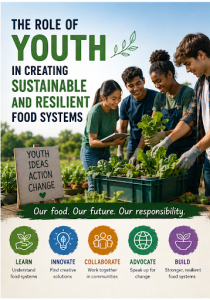
When people think about changing the world’s food system, they often imagine scientists, farmers, or government leaders. However, young people are becoming some of the most important voices in creating a more sustainable and resilient food system. As climate change, food waste, and food insecurity continue to affect communities worldwide, youth are stepping up with new ideas, fresh perspectives, and a strong commitment to making a difference.
A sustainable food system provides enough healthy food for everyone while protecting the environment, supporting farmers, and using resources responsibly. Additionally, a resilient food system can adapt to challenges such as climate change, natural disasters, and economic problems without failing. Furthermore, this is a significant reason why young people play an essential role in building both because they will experience the long-term effects of today’s decisions.
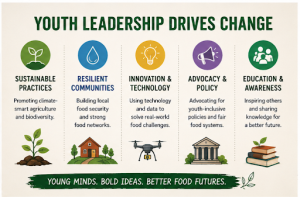
Likewise, one way youth are making an impact is by raising awareness about food-related issues. For example, through social media, school media, school clubs, blogs, and community events, young people are educating others about topics such as food waste, sustainable farming, and healthy eating. In addition, many youth-led organizations also encourage people to buy local foods, reduce plastic packaging, and support environmentally friendly farming practices. While these actions may seem small, when many people work together, they can create meaningful change.
Young people are also driving innovation in agriculture and food technology. Students interested in science, engineering, and technology are developing creative solutions to improve food production while reducing environmental impacts. For example, researchers and young entrepreneurs are exploring vertical farming, hydroponics, precision agriculture, and artificial intelligence to grow food more efficiently. Overall, these technologies help farmers use less water, fertilizer, and energy while increasing crop yields and reducing waste.
Moreover, climate change has made youth involvement even more important. Rising temperatures, droughts, floods, and extreme weather events are making it harder for farmers to grow food consistently. Young people around the world have become strong advocates for climate action because they understand that protecting the environment also protects future food supplies. By supporting renewable energy, reducing greenhouse gas emissions, and encouraging sustainable farming practices, youth are helping build food systems that can better withstand future challenges.
Community involvement is another powerful way youth contribute to sustainable food systems. Many students volunteer at community gardens, food banks, farmers’ markets, and local environmental organizations. These experiences teach valuable skills while helping improve access to nutritious food for people facing food insecurity. Community gardens, for example, provide fresh produce, reduce transportation emissions, and strengthen neighbourhood connections.
Youth also have an important voice in shaping policies that affect food systems. Around the world, young leaders participate in conferences, youth councils, and advocacy groups where they share ideas with decision-makers. Organizations such as the United Nations Food and Agriculture Organization (FAO) encourage youth participation because they recognize that young people bring creativity, innovation, and long-term thinking to solving global food challenges.
Although young people have great potential, they also face challenges. Many youth have limited access to land, funding, education, or leadership opportunities within agriculture. Therefore, supporting youth through education, mentorship programs, scholarships, and community initiatives can help them become future farmers, researchers, entrepreneurs, and policymakers who strengthen food systems for generations to come.
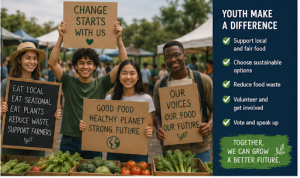
Creating sustainable and resilient food systems is not the responsibility of one person or one organization. It requires collaboration between governments, farmers, businesses, educators, and communities. Thus, young people have the energy, creativity, and passion to inspire positive change. Whether by reducing food waste at home, supporting local farmers, volunteering in their communities, or advocating for climate action, every young person can contribute to building a healthier and more sustainable future.
The future of our food depends on the choices we make today. Perhaps by empowering youth to take action and participate in food system decisions, we can create a world where everyone has access to nutritious food while protecting the planet for future generations.
References
Food and Agriculture Organization of the United Nations (FAO). (2022). The State of Food and Agriculture 2022: Leveraging Automation in Agriculture for Transforming Agrifood Systems. https://www.fao.org/interactive/2026/cost-healthy-diet/en/. Accessed July 25, 2026.
Food and Agriculture Organization of the United Nations (FAO). Youth and Agriculture. https://www.fao.org/newsroom/detail/the-status-of-youth-in-agrifood-systems–new-fao-report-shines-light-on-pitfalls-and-prospects-for-1.3-billion-young-people/en. Accessed July 25, 2026.
United Nations. (2015). Transforming Our World: The 2030 Agenda for Sustainable Development. https://sdgs.un.org/2030agenda. Accessed July 25, 2026.
United Nations Environment Programme (UNEP). Food Waste Index Report. https://www.unep.org/resources/publication/food-waste-index-report-2024. Accessed July 26, 2026.