Written By: Mannat Malhan
Edited By: Soham Parmar
Designed By: Rashiqa Ali
Published By: Harneet Khurana
The World’s Most Expensive Spice is Just A Flower
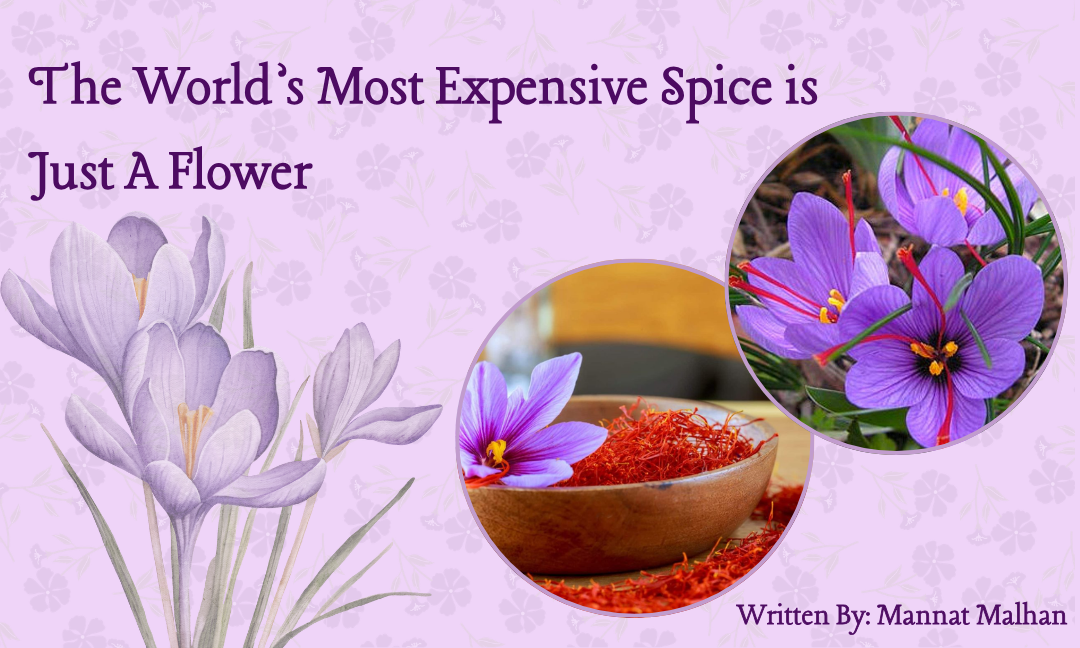
Saffron comes from a flower. That alone isn’t really impressive, but thousands of flowers end up becoming food in one way or another. Saffron, however, is different because the spice comes from just three red threads inside each purple Crocus sativus flower, and getting those threads from the field into a jar takes an absurd amount of work.
The flower itself is pretty easy to overlook. Crocus sativus is a small purple flower that blooms in the fall, usually blooming for only a short period of time.. If you saw a field of them, you might think they were there for decoration. But the tiny red strands inside them are one of the most expensive spices in the world. These strands are called stigmas, which are part of the flower’s reproductive system. Each flower only produces three individual stigmas, which creates a ridiculous production problem. If one flower gives you three stigmas, then producing a large amount of saffron means growing and harvesting a huge number of flowers. The United Nations Industrial Development Organization estimates that 150,000 to 170,000 Crocus sativus flowers are needed to produce 1 kilogram of dried saffron.
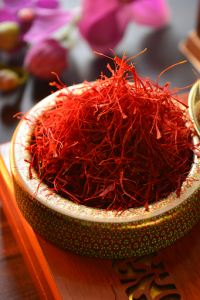 However, growing all those flowers is only the beginning. Saffron harvesting is one of the reasons the spice is so expensive. The flowers must be picked during their brief blooming period, and the stigmas need to be removed by hand. Workers collect the flowers and carefully separate the stigmas from the rest of the plant before they’re dried and processed. There is no convenient part of this process where a farmer can simply harvest the entire plant and let a machine do the rest. The valuable product is tiny and fragile, which is unusual compared to most of the foods we eat. When wheat is harvested, the grain is the crop. When apples are picked, the fruit is the crop. With saffron, the farmer grows an entire plant and waits for it to produce a flower, only to use a tiny piece of it. Because those stigmas are so small, the harvesting process is extremely labour-intensive. This is one of the reasons saffron costs so much. The price isn’t simply the result of it being a luxurious ingredient, but also the amount of labour required to produce it.
Once the stigmas are separated, they need to be dried. Fresh saffron stigmas don’t have the same characteristics as the dried spice we use in cooking. Drying changes their chemical composition and helps develop the colour, flavour, and aroma that make saffron recognizable. There are three main compounds involved here. First, there is crocin, which is responsible for saffron’s strong yellow-orange colour. This is why adding even a small amount of saffron to something like rice can turn the entire dish a bright golden colour. Then, picrocrocin contributes to saffron’s bitter taste. Finally, there is safranal, a compound that gives the spice its distinctive aroma. And these compounds help explain another strange thing about saffron: we don’t need very much of it. A recipe might call for only a pinch of saffron, but obviously that tiny amount has a noticeable effect on the entire dish. This is why saffron can work despite being produced in such small quantities. As mentioned, even a kilogram of dried saffron represents an enormous amount of labour, yet the final product is light enough to fit into a small container. In other words, saffron is the opposite of a bulk commodity. A food like wheat becomes valuable because of how much of it can be produced, transported, and sold. Saffron is expensive because it requires massive manual labour to yield a very small amount of spice. This also means that where saffron is grown matters.
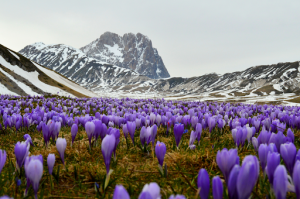 Today, saffron is produced in several parts of the world, particularly across Iran, India, Greece, Spain, and other Mediterranean and Middle Eastern regions. Iran is by far the largest producer and accounts for the vast majority of global saffron production. Kashmir, in northern India, is another historically important growing region, while Spain and Greece have long traditions of growing and processing the spice. The different growing regions show how saffron is connected to more than just the crop itself. Agriculture depends on climate, soil, labour, markets, and traditions. All of those influence whether a crop can become part of a food system. In the Gonabad region of Iran, saffron farming is connected to a traditional irrigation system called qanats. Qanats are underground channels designed to transport groundwater over long distances, allowing people to farm in areas where water is limited. The region is extremely dry, so managing water is needed for agriculture. Saffron fits into this environment because it doesn’t require much water. Over generations, saffron farming became connected to the landscape and livelihoods of the people there. In 2018, the Food and Agriculture Organization (FAO) recognized the Gonabad qanat-based saffron system as a Globally Important Agricultural Heritage System (GIAHS). So, saffron is connected to particular places and the people who have developed ways of growing it there.
It’s easy to call saffron the world’s most expensive spice and leave it at that. But the real story is that saffron is a spice that is highly prized because of its tiny yields but massive effort to harvest. A flower produces three red threads, and thousands of flowers produce a little more. And after all of that growing, picking, separating, drying, and selling, those threads eventually end up in a tiny jar on a grocery-store shelf. Saffron really is just a flower, but happens to be one of the clearest examples of how much work can be hiding inside something so small.
References
Saffron. McCormick Science Institute. Retrieved August 21, 2026. https://www.mccormickscienceinstitute.com/resources/culinary-spices/herbs-spices/saffron.
Crocus Sativus (Autumn Crocus, Saffron, Saffron Crocus) | North Carolina Extension Gardener Plant Toolbox. Retrieved August 21, 2026. https://plants.ces.ncsu.edu/plants/crocus-sativus/.
Crocus. Washington College. (2026). https://www.washcoll.edu/learn-by-doing/ces/plants/iridaceae/crocus-sativus.php.
Rotteveel, B. (2017, September 6). Crocus Sativus and Saffron: Uses and Benefits. DutchGrown. https://www.dutchgrown.com/blogs/the-dutchgrown-blog/crocus-sativus-and-saffron-uses-and-benefits/.
United Nations Industrial Development Organization. Saffron industry value chain development. (2013). Project Document 120595. https://downloads.unido.org/ot/29/59/2959226/Project%20Document%20120595.pdf.
Aytekin, A., & Acikgoz, A. O. (2008). Hormone and microorganism treatments in the cultivation of saffron (Crocus sativus L.) plants. Molecules, 13(5), 1135–1146.
Saffron: World’s Most Expensive Spice | University of Vermont Extension | The University of Vermont. (2024).
Saffron: A Tale of Red Gold and How to Produce Your Own. (2025). Penn State Extension.
Marion, L. (2026, August 5). How to Grow Saffron Crocus: The World’s Most Expensive Spice. MIgardener.
Ramin Rezaee & Hosseinzadeh, H. (2013). Safranal: From an Aromatic Natural Product to a Rewarding Pharmacological Agent. Iranian Journal of Basic Medical Sciences, 16(1), 12.
Nanda, S., & Madan, K. (2021). The role of Safranal and saffron stigma extracts in oxidative stress, diseases and photoaging: A systematic review. Heliyon, 7(2), e06117.
Crocus sativus (Saffron Crocus). (n.d.). Gardenia.Net. Retrieved August 21, 2026.
Mostafavi, M. (2026, June 14). Where Does Saffron Come From? Origins & Growing Regions. Agroota.Com.
Saffron | Description, History, & Uses. (n.d.). Encyclopedia Britannica.
Qana Saffron System | Globally Important Agricultural Heritage Systems | Food and Agriculture Organization of the United Nations. (2018).
Jomehpour, M. (2009). Qanat irrigation systems as important and ingenious agricultural heritage: case study of the qanats of Kashan, Iran. International Journal of Environmental Studies, 66(3), 297–315.
World, U. (2018). Lut Desert. https://whc.unesco.org/en/list/1505.
Sites in Iran, Morocco and Spain recognized as important for the world’s agricultural heritage. (2025, February 26). Newsroom; FAO.