Written By: Hatim Dungrawala
Edited By: Ocean Croft
Designed By: Jedrick Asuncion
Published By: Mannat Malhan
The warm, humid months of a typical Canadian summer are a short-lived luxury for the agriculture industry, who rely on this specific time period to yield the most crops. On top of that, these months are single-handedly the most important time to locally grow produce, as the harsh winter months force Canadians to tap into foreign imports and food storage facilities to go about their daily lives. So this begs the question: is there a way to extend our growing time in Ontario, and what are the potential solutions associated with such an approach? Is it even possible?
Currently, due to the natural abundance of resources and the sheer size of the province, Ontario plays a crucial role in sustaining the agricultural industry of Canada. 25.5% of all farms in the country are found in Ontario, with the province notably leading in soybean and corn for grain production.
Financially, prosperity is mixed, as over half of the farms in Ontario are generating less than $100,000 in revenue annually. In spite of this growing gap, from a general perspective, Ontario’s agriculture industry consisted of 71,700 employees and made 9.2 billion dollars in revenue, showcasing how crucial this sector of the economy is to Ontario’s wealth. For the 2026 growing season, temperature and rainfall have been hovering around normal levels. Additionally, ideal farming conditions beginning in the spring have led to projections of normal to above-normal crop yields this year.
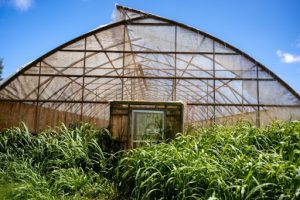
Integration of practical solutions to extend our growing season is becoming a more feasible reality for Ontario’s agricultural sector, driven by the natural increase in warmth and a number of technological advances that could completely reshape the industry. The implementation of greenhouses would have a noticeable impact. Greenhouse food production has seen significant increases over the years, and its potential is appealing.
Production centred in controlled and contained areas, like greenhouses, will allow harvests and crops to be less prone to changes in the environment, such as extreme weather events, seasonal anomalies, and differences in precipitation, meeting future food demand. Moreover, the optimization of resource use is primarily evident in facilities such as greenhouses, as specialists can fine-tune systems to use a dynamic combination of temperature, light, and fertigation, yielding increased plant growth.
A second approach to tackling Ontario’s short summer season is utilizing seeds and plants that slow maturation while spiking production levels, allowing for countless fruits to stay fresh and in abundance. Wide varieties of crops are created to fit these parameters, including day-neutral strawberries and early-season peach varieties, cultivated through research led by the Ontario Agri-Food Innovation Alliance.
This type of strawberry has a relatively lengthy growing season, ranging from late May to mid-October, while the peaches mitigate potential weather issues associated with the winter, allowing farmers to be one step ahead on matters related to imports.
The severity of climate change may in fact act as a positive contributor to longer growth seasons. Any resulting changes in temperature and climate from this would be partially induced by Canada’s northern latitudes, surpassing the global standard in this regard.
Future projections related to carbon dioxide presence in the atmosphere suggest an increased quantity; although this estimation has numerous negative effects as discussed in countless articles, shows, and books worldwide, in terms of crop production, it may yield an optimistic outlook. Excess CO2 will optimize the water crops need, while raising photosynthesis, being primarily evident in oilseeds and small grains.
Despite the practical integration and evidence needed to actively support an extended growing season, several limitations and issues could arise in fulfilling this objective. Notably, the elongation of the growing season will occur due to more heat, but seeding procedures may be postponed and suspended as a result of various factors, including nutrient runoff, soil erosion, and waterlogged fields.
The development of frost later in the calendar, in combination with prominent fluctuations in autumn and spring heat, could mitigate blossoming as a result of severe strain placed on fruit trees. Water supply could become restricted for countless plants, increasing strain and lowering their efficiency due to higher rates of evapotranspiration.
Greenhouses, as discussed prior, also face several setbacks regarding their integration into the sector. Operating these enclosed structures remains a highly expensive and energy-intensive process, and in order to successfully produce crops, they must sustain proper humidity, ventilation, lighting, and various other features, paired together with their respective expenses.
Additionally, farmers in Northern Ontario experience difficulty in expanding their farming operations, as economic disincentivization and a lack of potential benefit have slowed down agricultural progress in the area; this slowdown automatically decreases the likelihood of growing seasons being extended across the entire province, especially in areas further north and situated near the Clay Belt, a region of northern arable land. Environmental prioritization further hinders advancement, as expanding farming operations to more of the Crown lands would bear a severe impact on local habitats, ecosystems, and environmental well-being.
In essence, the agricultural state of Ontario is a combination of mixed financial progress, suggesting a strong overall economic output but with localized gaps. Practical solutions have been devised to extend the season in the province, proving feasibility, but are plagued by numerous limitations that stretch its potential implementation far into the future.
In the end, a combination of regulatory compliance, local agreements, advanced technology, and significant financial funding will be needed to support such endeavours, giving farmers the ability to farm long into the harsh winters of Ontario without compromising on output.
References:
Adventures, W. T. (2026). Free photo of farm greenhouse. StockSnap. http://stocksnap.io/photo/farm-greenhouse-DTYRHJB63M.
Anderson, T. (2026, July 16). The forgotten tropical fruit that literally tastes like peanut butter: Bunchosia argentea. Toptropicals.Com. https://toptropicals.com/gardenblog/1784217671.htm?srsltid=AfmBOopbo3jDOymiPXF-E1c7uS71iD0Ph8lTd_uSeNVYzsIHWfOBMmy8.
Canada, A. A.-F. (2019). National agroclimate risk report – spring conditions for May 19 to June 8, 2021. In agriculture.canada.ca. https://agriculture.canada.ca/en/agricultural-production/weather/national-agroclimate-risk-report
Government of Canada. (2020). Climate scenarios for agriculture. In agriculture.canada.ca. https://agriculture.canada.ca/en/environment/climate-change/climate-change-impacts-agriculture.
Government of Canada, S. C. (2022). Ontario is an agricultural powerhouse that leads in many farming categories. In www150.statcan.gc.ca. https://www150.statcan.gc.ca/n1/pub/96-325-x/2021001/article/00006-eng.htm
Harvest-boosting alliance innovations: Helping Ontario Farmers grow more food | University of Guelph. (2024). Uoguelph.Ca. https://www.uoguelph.ca/alliance/research-impact/harvest-boosting-innovations
Ibeagwu, O. I., Brenders, V., Lubitz, W. D., Mahmud, S., & Tasnim, S. (2026). Technological pathways for decarbonizing cold-climate greenhouses: A detailed review. Renewable and Sustainable Energy Reviews, 238, 117099. https://doi.org/10.1016/j.rser.2026.117099
Marjan Massoom. (2026). Ontario’s pitch to expand northern farming sparks questions from farmers, food security experts. In CBC. https://www.cbc.ca/news/canada/sudbury/ontario-claybelt-development-9.7192737
Pixnio. (2017). Free picture: Farm, field, grain, agriculture, crops. In PIXNIO – Public Domain Images. https://pixnio.com/flora-plants/crops/farm-field-grain-agriculture-crops
Smithwick, S. (2025). Water and Agriculture in Ontario – Canada WaterPortal. In Canada WaterPortal. https://waterportal.ca/water-and-agriculture-in-ontario/
Talukder, S. (2024, June 12). The greenhouse boom: How indoor farming can transform food production and exports. RBC Thought Leadership. https://www.rbc.com/en/thought-leadership/agriculture/the-greenhouse-boom-how-indoor-farming-can-transform-food-production-and-exports/
Wikipedia Contributors. (2026, August 8). Clay Belt. Wikimedia Foundation. Wikipedia. https://en.wikipedia.org/wiki/Clay_Belt