Written By: Tanvi
Edited By: Mannat Malhan
Designed By: Andria Sahar
Published By: Ayman Anas Khan
Farmland Reappropriation: Understanding Policies that Impact Food Security and Communities
Farmland is one of the world’s most valuable resources because it provides the land needed to grow crops and raise livestock that feed millions of people. As cities expand and populations increase, pressure on farmland has grown in many regions. Governments, businesses, and developers often face difficult choices about how land should be used. One issue that has received increasing attention is farmland reappropriation, which refers to the process of changing farmland from agricultural use to other purposes, or in some cases returning land to farming through new policies. Decisions about farmland affect much more than the landscape. They influence food production, local economies, environmental health, and the lives of farming communities. Understanding the policies behind these decisions helps explain why farmland protection has become an important topic around the world.
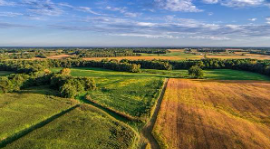
Many governments create land use policies that determine whether farmland can be developed into housing, industrial areas, or transportation infrastructure. In rapidly growing cities, the demand for new homes and businesses often leads to farmland being converted into urban developments. This can create economic opportunities and provide space for expanding populations, but it also reduces the amount of land available to grow food. Once high-quality farmland is covered by roads or buildings, it is extremely difficult to restore it to productive agricultural use. Some countries have introduced farmland preservation policies to slow this process. These policies may include zoning laws that limit development on agricultural land, tax incentives that encourage farmers to continue farming, or conservation easements that permanently protect farmland from future development. In places such as Ontario, the Greenbelt has helped preserve large areas of farmland near growing urban centers, balancing the need for development with the importance of maintaining agricultural production. While these policies can protect food production, they sometimes create disagreements between landowners, developers, and governments because they affect property values and future land use options.
Food security is closely connected to how farmland is managed. Food security means that people have reliable access to enough safe and nutritious food to live healthy lives. When productive farmland is lost, food production may decline, increasing dependence on imported food from other regions or countries. This can make food supplies more vulnerable to disruptions caused by natural disasters, climate change, political conflicts, or global economic changes. The COVID-19 pandemic demonstrated how quickly supply chains can be interrupted, reminding many countries of the importance of maintaining strong local food systems. Protecting farmland also helps reduce transportation distances, allowing fresh food to reach consumers more efficiently while lowering greenhouse gas emissions associated with long-distance shipping. At the same time, farmland policies must consider the financial realities faced by farmers. Rising land prices, increasing production costs, and unpredictable weather have made farming more difficult in many areas. If younger generations cannot afford to purchase farmland, agricultural production may continue to decline even when farmland remains protected. Successful policies therefore need to support both the land itself and the people who depend on it for their livelihoods.
Farmland reappropriation also has significant effects on local communities and the environment. Farming communities often develop strong cultural traditions that are closely connected to the land. When farmland disappears, local businesses that rely on agriculture may also struggle, including equipment suppliers, food processors, and farmers’ markets. Schools and community organizations in rural areas can be affected as families move away in search of new employment opportunities. Environmental impacts are equally important. Farmland provides habitats for many species, helps absorb rainwater, and can store carbon when managed using sustainable agricultural practices. Replacing farmland with urban development increases areas covered by concrete and asphalt, which contributes to flooding, habitat loss, and higher local temperatures. On the other hand, farmland itself must also be managed responsibly because poor farming practices can lead to soil erosion, water pollution, and declining biodiversity. For this reason, many modern policies encourage sustainable farming methods alongside farmland preservation. These approaches include crop rotation, soil conservation, efficient irrigation, and reduced pesticide use, all of which help maintain productive land while protecting natural ecosystems.
Finding the right balance between development and farmland preservation remains one of the biggest challenges facing policymakers today. Growing populations require housing, transportation, and economic development, yet every decision to convert farmland carries long-term consequences for food security and community stability. Effective farmland policies recognize that agriculture is not simply another land use. It is a foundation of public health, economic resilience, and environmental sustainability. Governments, farmers, planners, and residents all play important roles in shaping these decisions through public consultations, responsible planning, and continued investment in sustainable agriculture. As climate change places additional pressure on global food systems, protecting productive farmland will likely become even more important. By carefully considering how land is used today, societies can help ensure that future generations have access to both the food they need and the healthy communities that depend on agriculture.
References:
Food and Agriculture Organization of the United Nations. (2006). Food security. https://www.fao.org/3/al936e/al936e.pdf
Government of Ontario. (n.d.). Greenbelt Plan. https://www.ontario.ca/page/greenbelt-plan
United Nations. (2015). Transforming our world: The 2030 Agenda for Sustainable Development. https://sdgs.un.org/2030agenda
United States Department of Agriculture. (2022). Farmland protection policy. https://www.nrcs.usda.gov/programs-initiatives/farmlands-protection-policy-act
World Bank. (2023). Food security. https://www.worldbank.org/en/topic/food-security