Pollinator Decline: What it Means For Our Food
Written By: Tanvi
Edited By: Hatim Dungrawala
Designed By: Yaashi Mulchandani
Published By: Vagavi Velavathasan
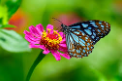
Pollinators are some of the most important workers on Earth. Bees, butterflies, birds, bats, and other insects help plants reproduce by carrying pollen from one flower to another. It sounds simple, but this process supports a huge part of the world’s food supply. Without pollinators, many crops would struggle to grow. Some would disappear completely.
Nowadays, pollinator populations are declining across the world. Scientists have connected this decline to habitat loss, pesticide use, climate change, disease, and pollution. As cities expand and large areas of land are turned into monoculture farms, pollinators lose both food sources and nesting spaces. Certain pesticides also harm bees and other insects directly, damaging their immune systems and making it harder for them to survive.
The effects are already being noticed in agriculture. Fruits, vegetables, and nuts are especially vulnerable because many of them depend heavily on insect pollination. Apples, blueberries, almonds, pumpkins, and avocados all rely on pollinators for healthy production. According to the Center for Food Safety, 71 of the 100 crop varieties that provide 90 percent of the world’s food are pollinated by bees. Pollinators are not just responsible for making food available, they also help maintain food quality and variety. A world with fewer pollinators would likely have fewer nutritious and healthy foods. Grocery stores might still have staples like rice, wheat, and corn because those crops are mostly wind-pollinated, but many fresh foods, like apples and almonds, which people rely on for vitamins and minerals, would become harder to grow. Prices would rise. Diets would have less effect.
Moreover, researchers have already found evidence of this problem. A recent global study analyzing farms across six continents discovered that many crop systems are producing lower yields because flowers are not receiving enough visits from pollinators. In some cases, fields were simply not being pollinated enough to reach their full potential. This is not only about humans either. Pollinators support entire ecosystems. Around 75 percent of flowering plants depend on animal pollination. When pollinator populations shrink, wild plants suffer too. That affects animals that rely on those plants for food and shelter. Ecosystems become weaker and less diverse over time. Even foods people do not immediately connect to pollination can be affected. For example, alfalfa depends on pollinators for seed production. Alfalfa is then used to feed dairy cows and livestock. So, fewer pollinators could eventually impact milk, eggs, and chicken production as well.
In addition to that, the economic impact is huge too. Pollination services contribute billions of dollars to agriculture every year. In Canada, honey bee pollination contributes an estimated $7 billion annually to agriculture. Farmers depend on healthy pollinator populations to maintain stable harvests and profits.
Yet despite their importance, pollinators continue to disappear. Honey bee colonies in Canada have dropped dramatically over the past several decades. Wild bee species are declining too. Some are now considered threatened or endangered. Climate change is making things even harder. Rising temperatures can disrupt the timing between flowering plants and pollinators. Flowers may bloom earlier than usual while pollinators emerge later, meaning the two no longer line up properly. Heat waves and extreme weather also damage habitats and reduce the availability of nectar and pollen.
But experts do believe there is a chance for averting this crisis if action is taken quickly. One important solution is creating pollinator-friendly habitats. Planting native flowers, preserving natural green spaces, and reducing lawn space can give bees and butterflies more food and shelter. Even small gardens can help. Avoiding harmful pesticides is another major step. Some farmers are also using more sustainable agricultural practices that protect biodiversity instead of relying heavily on chemicals. Environmental organizations are pushing for stronger protections as well. Conservation programs, habitat restoration, and better pesticide regulations could help pollinator populations recover over time. Scientists are also researching new ways to support bee health and improve pollinator diversity.
In conclusion, the decline of pollinators may seem like a distant environmental issue, but it directly affects daily life. The food people eat, the prices in stores, and the health of ecosystems all depend on these small creatures. Bees and other pollinators are easy to overlook, yet they quietly support much of the world’s agriculture. Without them, our food system becomes weaker. Protecting pollinators is really about protecting the future of food itself.
References
American InterContinental University. (n.d.). How declining pollinators are impacting global food production. AIU. https://www.aiu.edu/innovative/how-declining-pollinators-are-impacting-global-food-production/
Agriculture and Agri-Food Canada. (2025). Statistical overview of the Canadian honey and bee industry, 2025. Government of Canada. https://agriculture.canada.ca/en/sector/horticulture/reports/statistical-overview-canadian-honey-and-bee-industry-2025
Center for Food Safety. (n.d.). Impacts on the food supply. https://www.centerforfoodsafety.org/issues/304/pollinator-protection/impacts-on-the-food-supply
Flower Magazine. (n.d.). How to plant a pollinator garden. https://flowermag.com/how-to-plant-a-pollinator-garden/
North Carolina Museum of Natural Sciences. (n.d.). 5 ways to help pollinators in your own backyard. Retrieved May 25, 2026, from https://www.naturalsciences.org/calendar/news/5-ways-to-help-pollinators-in-your-own-backyard/
Rove Pest Control. (n.d.). Transform your garden with pollinators and pest control. Retrieved May 25, 2026, from https://www.rovepestcontrol.com/blog/transform-your-garden-with-pollinators-and-pest-control/
Scientia Global. (n.d.). Pollinator decline: Implications for food security & environment. https://www.scientia.global/pollinator-decline-implications-for-food-security-environment/