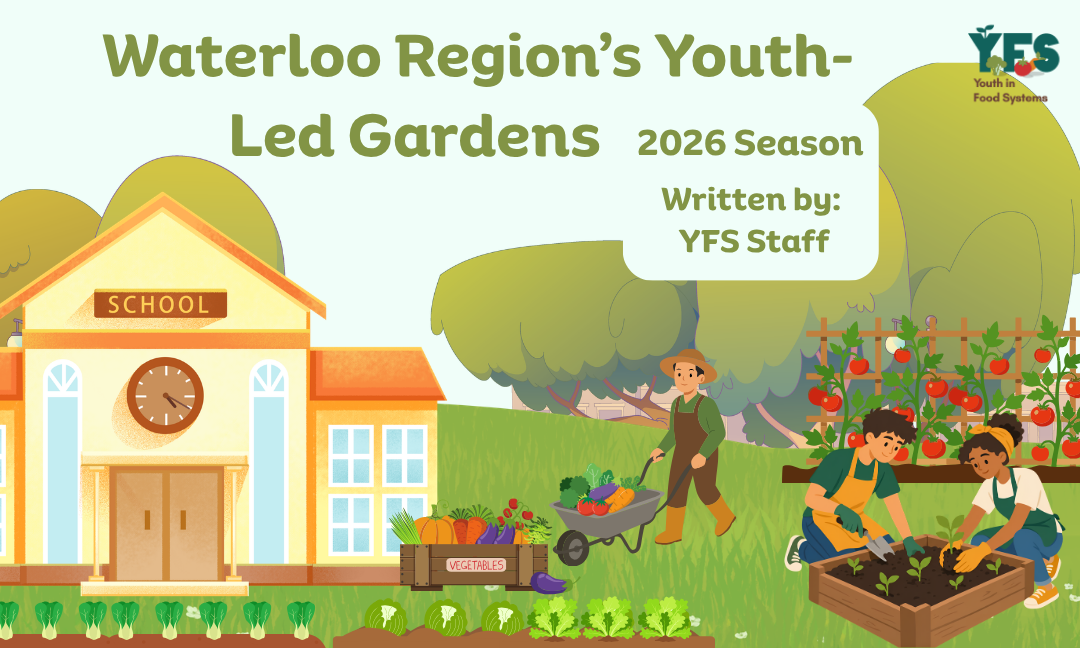
Yesterday, we took you on a journey through the Markets created and cared for by our youth leaders this summer. Now, let’s delve into the production side of the project: the gardens!
Since 2017, Youth in Food Systems has been supporting school-based food production, building our network of 47 gardens across the Region. And since 2021, we have been operating youth teams in gardens over the crucial summer months when schools are out and many spaces don’t have reliable maintenance plans. This enables the gardens to keep flourishing while simultaneously having valuable, hands-on space for youth learning and leadership. It’s truly a win-win!
Once again this year, six garden spaces were chosen for our youth-led work based on the need for summer support, garden size and capability to grow a meaningful amount of food, and the proximity to our Market locations. For the first time, all summer gardens were at high schools, which was beneficial for a few reasons (dedicated school year curriculum, more youth leadership capability, stronger funding streams, and familiarity to the youth in the program).
What did the season look like for the youth leaders?
The season started off with a series of spring field trips, pre-season training days, and team meet-ups – more on this in yesterday’s Market post. Then, equipped with new insights into local food, connections with their peers and adult allies, hands-on training in growing food, and a plethora of other experiences, the gardens became theirs for the summer months!
For eight weeks in July and August, the Garden Leaders took over! Each garden consisted of 3-8 youth working to care for and improve the spaces, and harvesting regularly for the Youth Food Market. Each Market was connected to two garden teams to create a direct pathway from growing to community distribution. Produce harvested at Eastwood and CHCI gardens made its way to the Eastwood Market; KCI and Resurrection supplied the Victoria Hills Market; and St. Benedict and Huron Heights supplied the Fiddlesticks Market. This gave the Garden Leaders the opportunity to see the food they grew move beyond the garden and into the hands of community members through Markets led by their fellow youth.
Each team had a $200 Garden Improvement Fund to support their own creations and ideas in the garden. The prompt: how can you, as a team, leave the space better than the way you found it in early July?
Each team also had a Garden Mentor to call upon for support and expertise throughout the summer. Massive thank-you to Nancy, Barbara, Paul, Sally-Sue, and Sarah for the passion and care they brought to the project.
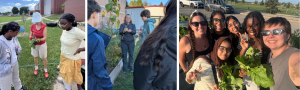
A look at the numbers: In total, 39 youth spent approximately 475 hours in the gardens, harvesting at least 330lbs of produce and taking part in activities to nurture and grow the garden into flourishing spaces for learning and leadership.
Read about and see each of the garden spaces and the teams that made them come to life!
RESURRECTION
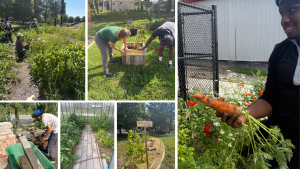
At Resurrection Garden, the team set out to bring new life and structure to a food forest that had become scattered and difficult to define. Over the eight-week summer program, 4 Garden Leaders contributed 53.75 hours caring for and improving the Resurrection garden, with their summer harvests making their way to the Victoria Hills Market. Using their Garden Improvement Fund, youth brought in soil and reorganized the space to make the food forest more noticeable and purposeful. They also planted extensively in the greenhouse and worked to improve the greenhouse growing space.
Throughout the summer, the team grew and harvested carrots, onions, potatoes, peppers, cucumbers, squash, beets, and more. Despite having fewer youth available to work in this garden, the team was especially proud of how much they accomplished together and the transformation they were able to make. In their words, the summer was “so much fun and full of plentiful harvests!”
KCI
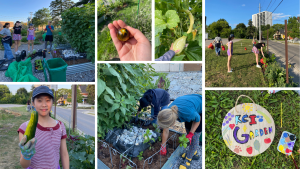
The KCI team left their mark on their garden in more ways than one. Over the eight-week summer program, 6 Garden Leaders contributed 91.5 hours caring for and improving the KCI garden, with their summer harvests making their way to the Victoria Hills Market. Using their Garden Improvement Fund, youth painted a colourful garden sign to make the space feel more personal and welcoming, expanded the growing area, and experimented with a straw bale garden that turned out to be a great success. They also added a birdhouse, bird bath, and toad abode to create more habitat for wildlife.
The garden itself was bursting with variety. Youth grew zucchini, tromboncino squash, kale, tomatoes, New Zealand spinach, watermelon, cucumbers, lettuce, carrots, sweet potatoes, purple chilli peppers, herbs, and flowers. Tromboncino was particularly memorable as there was so much of it that, as the team put it, “it’s everywhere!”.
Beyond the harvest, youth were proud of the positive attitude their team maintained and the way everyone kept showing up. From painting their sign and taking photos to getting soaked while watering, meeting new people, and figuring things out together, the garden became a place for both learning and connection. They described it as “a really fun and productive summer where we learned a lot, tried new things, met new people, and saw the power of working together as a community.”
CHCI
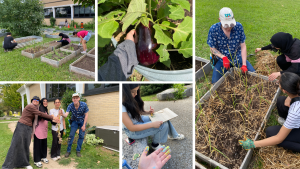
At CHCI, the summer was all about learning by doing, solving problems, and helping the garden thrive. Over the eight-week summer program, 5 Garden Leaders contributed 32.5 hours caring for and improving the CHCI garden, with produce harvested throughout the summer helping stock the Eastwood Market.
The Garden Improvement Fund gave youth an opportunity to solve some of the practical challenges they encountered while also making the space more welcoming to wildlife. The team built a birdhouse and bird bath to support biodiversity, installed trellises and stakes to support their tomatoes, added soil to low garden beds, and purchased a wheelbarrow that made moving all that soil much easier!
Their work supported an impressive variety of produce, including lettuce, wild raspberries, banana peppers, garlic, cherry tomatoes, potatoes, Swiss chard, kale, carrots, dill, parsley, zucchini, eggplant, and snow peas. But some of the most important things they harvested were new skills. Youth learned more about caring for different plants, understanding what they need to thrive, and working together to keep a garden healthy. One memorable new skill? Learning how to braid garlic! Their summer was about “building new skills, learning together, and getting our hands dirty in the garden.”
EASTWOOD
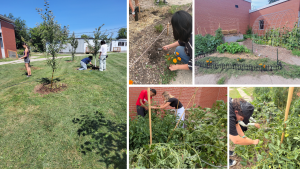
The Eastwood garden needed structure, protection, and plenty of care, and its youth team got to work! Over the eight-week summer program, 6 Garden Leaders contributed 90.75 hours caring for and improving the Eastwood garden, with their harvests helping supply the nearby Eastwood Market.
Using their Garden Improvement Fund, they built a trellis arch and bug hotel, added more structure to the garden beds, and brought the pollinator garden back to life. These improvements were particularly important for a garden that needed greater protection from the effects of road salt during the winter months.
Throughout the summer, youth grew tomatoes, cantaloupe, corn, hot peppers, cabbage, and much more, with some of that produce making the short journey from the garden to the nearby Eastwood Youth Food Market. The team was especially proud of the effort everyone put in, both inside and outside the garden. Determination became a defining quality of their summer, which they summed up as being “full of hard work, good times, and good people!”
HURON HEIGHTS
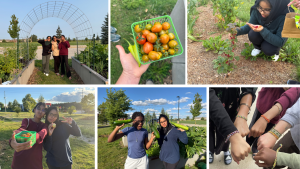
At Huron Heights, growth happened both in the garden and among the youth who cared for it. Over the eight-week summer program, 4 Garden Leaders contributed 67.9 hours caring for and improving the Eastwood garden, with their harvests helping supply the Fiddlesticks Market.
The team encountered a very successful problem: their plants were growing! With tomatoes becoming too large and beginning to crowd neighbouring plants, youth used their Garden Improvement Fund to build a trellis from scratch. They staked and pruned the tomatoes, creating more room for the rest of the garden to thrive. The team grew tomatoes, bell peppers, basil, carrots, snow peas, turnips, radishes, potatoes, onions, and zucchini throughout the summer. But alongside the produce, something else grew too: friendships. Youth were particularly proud of the trellis they built together and the relationships they formed along the way. Their verdict on the summer? “A moment to remember!”
ST BENEDICT
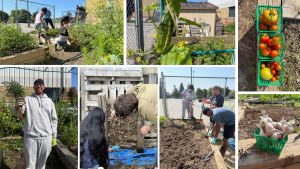
At St. Benedict, the summer was a lesson in patience, persistence and finding ways to thrive through the heat. Over the eight-week summer program, 8 Garden Leaders contributed 90.75 hours caring for and improving the St. Benedict garden, with their harvests helping supply the Fiddlesticks Market.
Summer heat presented a very real challenge at the St. Benedict garden. With virtually no shade available, the team used their Garden Improvement Fund to create a shaded area where youth could rest and recharge while working in the garden during hot summer days. Despite the heat, the garden produced plenty of tomatoes, strawberries, raspberries, turnips, cucumbers, and more.
There was a particularly exciting moment when the team’s turnips and beets finally sprouted after the hot weather had made seed germination difficult. Seeing those first signs of growth made the persistence worthwhile. The team captured their summer in three fitting words: “delicious and informative (and humid!)”
And a thank-you to our community and charitable partners: