Small Contaminants, Big Consequences: Exploring how E. coli Spreads Through Food Systems
Written By: Ayman Anas Khan
Edited By: Arjun Singh
Designed By: Yaashi Mulchandani
Published By: Tanvi Jillella
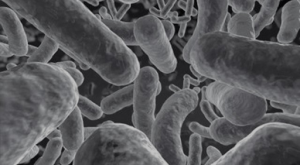
Can you imagine a single bite of contaminated food can contain millions of bacteria, invisible to the human eye, and powerful enough to cause severe or even fatal illness? For many people, this hidden danger is the reality of foodborne bacteria like E. coli. Even in modern food systems designed for safety, microscopic organisms can still move through the food chain in ways that are hard to detect until people become ill.
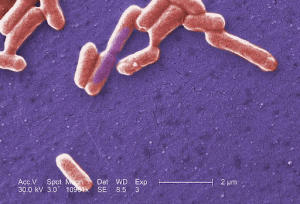
To better understand this, E. coli, also known as Escherichia coli, is a type of bacteria commonly found in the intestines of humans and animals. While most strains are generally harmless, more common variations of these bacteria can cause severe illnesses, such as stomach cramps, vomiting, and serious complications (Centers for Disease Control and Prevention). Because the bacteria is nearly invisible, it can spread through food without being noticed.
One major source of bacterial presence is animal agriculture, especially cattle farming. This is because cows naturally carry E. coli, and it can enter the environment through manure, or animal waste. From there, it can spread to water, soil, and crops through runoff or contaminated water from irrigation activities (World Health Organization). Furthermore, recent forms of foodborne illness have shown the severity of E. Coli, which include “pre-packaged” dough contamination, crops that have been treated with pesticide(s) and washed ineffectively, and the grinding tools used to mince meats, all of which show the risk of mixing different species of food without proper care, showing the importance of food safety.
Beyond the farm, food can also be contaminated during times of processing and distribution. Large facilities often mix products from many farms during transport or storage, and the bacteria can rapidly multiply and spread (United States Department of Agriculture). However, preventing large-scale cases of foodborne bacteria may also be difficult, as modern food systems include numerous stages of storage, handling, and most importantly transportation as the world shifts more towards globalization when it comes to food-based trade. Furthermore, cross-contamination is another major risk that E. coli can spread through shared equipment, surfaces, or improper handling in processing plants. Even small mistakes in hygiene can transfer bacteria onto large amounts of food.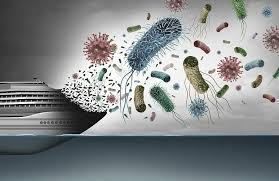
Finally, foodborne illnesses can also happen in homes. Improper cooking, unsafe food storage, or using the same utensils for raw and ready-to-eat foods can allow bacteria to spread directly to consumers.
Overall, E. coli spreads through food systems because there are many connected steps from farm to plate. While the systems are complex, understanding how contamination happens makes it easier to prevent foodborne illness through better hygiene, safety practices, and temperature control. Perhaps further studying the travel of foodborne illnesses such as E. Coli can not only inform us of the public consequences of the lack of stringent food safety measures present globally, but also numerous agriculturally sustainable solutions to permanently preventing the travel of harmful Food-borne Illnesses.
References:
Centers for Disease Control and Prevention. “E. coli (Escherichia coli).” CDC, https://www.cdc.gov/ecoli/. Accessed April 17, 2026.
World Health Organization. “E. coli.” WHO, https://www.who.int/news-room/fact-sheets/detail/e-coli. Accessed April 17, 2026.
United States Department of Agriculture. “Food Safety and the Danger Zone.” USDA FSIS, https://www.fsis.usda.gov/. Accessed April 17, 2026.