Written By: Valerie Belopolsky
Edited By: Tanvi
Designed By: Polina
Published By: Autumn Diamond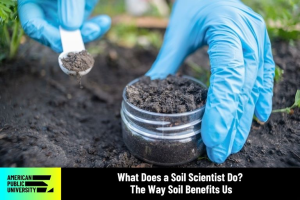
We often overlook the origin of the food on our plates. Most people rarely think about where the food on their plates comes from or the agricultural systems that make its production possible. Soil supports approximately 95% of global food production by providing crops with water and essential nutrients through their roots, making soil quality a major factor in the nutritional value of food. Soil poor in essential minerals like iron, zinc, and magnesium will reflect on the crops’ mineral content and nutritional value. Crops that look the same but were grown in different soils will possess different nutrient concentrations. Nutrient-deficient soil is weak and vulnerable to soil contamination like pesticides and industrial chemicals that disrupt biodiversity within the soil. A single gram of soil may contain up to a billion microorganisms and 50,000 different species. Some fertilizers and biosolids may contain trace amounts of PFAS, which can enter plants through their roots and accumulate in crops under certain conditions. Eventually, these crops will be consumed by humans; over time, nutrient-poor crops will result in a nutrient-deficient population.
This poses a question. How can we feed humanity while maintaining the health of the planet? The global population is expected to increase by approximately 2 billion people by 2050 and reach almost 11 billion in 2100. Soil scientists are able to help answer this question.
Soil scientists examine the physical and chemical properties of soil. They study the distribution, origin, and history of soil and plants and work to identify, interpret, map, and manage soil systems. They work to ensure food security by identifying nutrient needs, improving irrigation, and ensuring sustainable crop yields to feed a growing global population. Today soil science is crucial because as we experience major climate crises like climate change, population growth, and environmental damage, our foundational building block for land and food is being destroyed in the process.
 To meet the growing food demand, soil scientists increase crop yield without overusing land by understanding crop needs and analyzing nutrient levels, pH, and soil structure and biologically alter soil through composting and crop rotation by alternating crops with different nutrient needs, allowing soil to naturally restore its fertility without artificial fertilizers, helping to prevent nutrient depletion. Scientists use precision agriculture, where inputs such as water, sand, and fertilizers are carefully controlled, as well as soil sensors to determine which parts of a field need more or less attention, essentially maximizing yield while minimizing environmental impact. Improving crop yields decreases efforts at deforestation, protecting wildlife habitats, preventing land degradation, and preserving biodiversity. Food production increases without harming surrounding ecosystems, promoting long-term food system sustainability.
Soil science tackles climate change by assessing and reducing greenhouse gas emissions. Plants are able to absorb carbon, a major greenhouse gas, through photosynthesis and use carbon to grow leaves; once those leaves fall, the compounds are released and absorbed by soil. But practices like over-tilling and deforestation erode soil, transforming soil from a carbon sink into a carbon source. Soil scientists find ways to protect soil by implementing sustainable farming practices as well as science that increases carbon storage ethically.
Farmers, ranchers, researchers, government agencies, and energy companies all work with soil scientists to maximize crop production and sustainability, support sustainable grazing practices for animals, address environmental issues, monitor and manage soil conditions, and assess land for safe and responsible resource use for drilling. Soil scientists are highly impactful regarding our everyday life and food consumption.
Thus, soil scientists are essential for building a more sustainable future for our planet. With growing challenges, like climate change, growing populations, and unsustainable farming practices, it becomes more evident the critical role of soil scientists. From promoting sustainable farming practices to ensuring food safety, soil science has a direct impact on human health. Through research and laboratory work, soil scientists are shaping a sustainable and secure future for all.
Sources:
“Soil: The next Frontier | Ontario Agri-Food Innovation Alliance.” Uoguelph.ca, 2020, www.uoguelph.ca/alliance/news/2020/02/soil-next-frontier. Accessed 16 June 2026.
Olson-Sawyer, K. (2017, July 14). A Soil Scientist with a Plan for a More Resilient Food System. Civil Eats. https://civileats.com/2017/07/14/a-soil-scientist-with-a-plan-for-a-more-resilient-food-system/
Kostelnik, K. (2025, February 27). What Does a Soil Scientist Do? The Ways Soil Benefits Us. Apus.edu; American Public University. https://www.apu.apus.edu/area-of-study/math-and-science/resources/what-does-a-soil-scientist-do/
Center for Biological Diversity. (2021). Pesticides and Soil Health. Www.biologicaldiversity.org. https://www.biologicaldiversity.org/campaigns/pesticides-and-soil-health/
Evich, M. G., Davis, M. J. B., McCord, J. P., Acrey, B., Awkerman, J. A., Knappe, D. R. U., Lindstrom, A. B., Speth, T. F., Tebes-Stevens, C., Strynar, M. J., Wang, Z., Weber, E. J., Henderson, W. M., & Washington, J. W. (2022). Per- and polyfluoroalkyl substances in the environment. Science, 375(6580). https://doi.org/10.1126/science.abg9065