Written by: Ish Modi
Edited by: Mannat Malhan
Designed by: Jedrick Asuncion
Restaurants support food systems by acting as the bridge and the middle between small-scale producers and the public. When a restaurant buys from a farmer rather than a massive corporation, the money doesn’t circulate; it stays within the community, allowing for more growth.
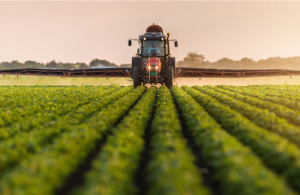 Did you know that the average piece of produce travels over 1,500 miles from the company to your plate? When restaurants buy locally, they eliminate the need for long-distance shipping and heavy packaging, which are major contributors to greenhouse gas emissions in our global food system and on our planet.
Large retailers only buy products that are perfect-looking, which causes a lot of good products to be thrown away. Restaurants have the unique ability to use ‘ugly produce.’ 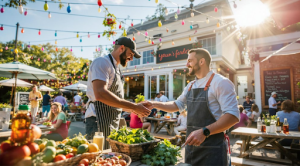 Chefs can take scarred tomatoes for sauces or crooked carrots for soups. By purchasing the entire harvest, restaurants help farmers reduce food waste at the source, making the whole food system more efficient and less wasteful.
A healthy and conservative food system shouldn’t have ‘trash’ as the last step. To fully support the food system, restaurants can partner with their suppliers to send organic waste back to the farm. This turns kitchen scraps into nutrient-rich compost, which the farmer then uses to grow the next batch of vegetables. This creates a ‘closed-loop’ system that helps regenerate soil.
Industrial agriculture favours “monocultures” growing only one type of crop (like the same type of potato or corn) because it’s easy to process. However, this makes our food system fragile. Chefs support edible biodiversity by putting varieties and rare local crops on their menus. When a restaurant creates a demand for a purple carrot or a specific local grain, they give farmers a financial reason to grow a wider variety of plants. This diversity makes our environment more resilient against pests and climate change.
Supporting these restaurants creates an economic multiplier effect. For every $1 spent at a local farm-to-table restaurant, significantly more money stays within the local economy compared to a national chain. This allows farmers to invest in sustainable technology and fair wages for their workers, strengthening the community for everyone.
Work Cited
Images:
https://deeringfarmsllc.com/understanding-the-impact-of-climate-change-on-farming-practices/
https://theloomisagency.com/building-local-restaurants-partnerships/
Information:
https://sustainableagriculture.net/
https://cloudkitchens.com/blog/benefits-of-local-sourcing-for-food-businesses/
https://www.ams.usda.gov/sites/default/files/media/Why%20Local%20Food%20Matters.pdf