What is this Decorative Seed Collection?

This unusual decoration is hanging on the wall in Seeds of Diversity's little office. We know what it is, but do you?
There are thousands of these in existence: collections of little glass bottles of seeds, corked, and mounted in cases or decorative panels.
What is it?
Who made it?
What is it for?
Last month we challenged you to guess. Here's the answer!
Seedy School Projects of a Century Ago
During the early 20th century, up until about the 1950s, it was common throughout Canada and the U.S. for schoolchildren to collect and learn about seeds in biology and agriculture classes.
Sometimes, a class would be assigned to collect seeds from weeds and wildflowers. In rural areas, a collection of agricultural seeds (wheat, rye, flax, oilseeds, etc) might be the assignment. In every case, the students were to find local plants or sources of seeds, collect them in little glass vials, label them with common and/or scientific names, and learn about the plants along the way.
If you search for "school seed projects in glass vials early 1900s" you'll find lots of images of these collections, and often excited anecdotes from people who discovered them in an uncle's closet, or a grandmother's basement. Often, they wonder whether the seeds will still grow after so many years.
Will the seeds still grow after so many years?
It would be wonderful if they did. Imagine sowing some wheat seeds from the 1920s and being able to grow a crop of legitmately century-old grain. Sadly, seeds don't really last that long, often less than a decade unless they're very well stored. Some ancient seeds discovered in very dry desert places have sprouted, but it's very rare. The key is that they were ideally and constantly dry, so they remained dormant for so long. Our homes are too humid for seeds to remain viable for 100 years, or even half that.
Besides, most of the seeds in these collections are common kinds that we still have anyway. The wildflower collections contain the same wildflowers that we still have, and the grain collections mostly don't identify specific varieties. Thankfully, seed savers have kept heritage varieties alive, so we don't have to depend on old school projects for our crop genetic salvation.
But it's always tempting to try.
More than a seed project
The main purpose of these classroom projects was for students to learn about seeds, plants, ecology, agriculture, and the science behind them. But the process also taught research skills, collecting and organizing skills, and the social cooperation needed to locate samples of seeds in the community.
Some of these projects simply displayed the glass seed vials in their original boxes, but others like the one mounted on the wall in our office, involved the creation of a display board. The project could include woodworking, creative design, mathematics, and aspects of many other skills over and above collecting and labelling the seeds.
We don't know how many of these classroom seed collections still exist, but we're sure that they were very common 80-100 years ago. We hope the next generation will be inspired to collect and learn about seeds too, and we're actually confident about that. Seeds are naturally inspiring, and we see that when children and youth discover them and their deeper importance.
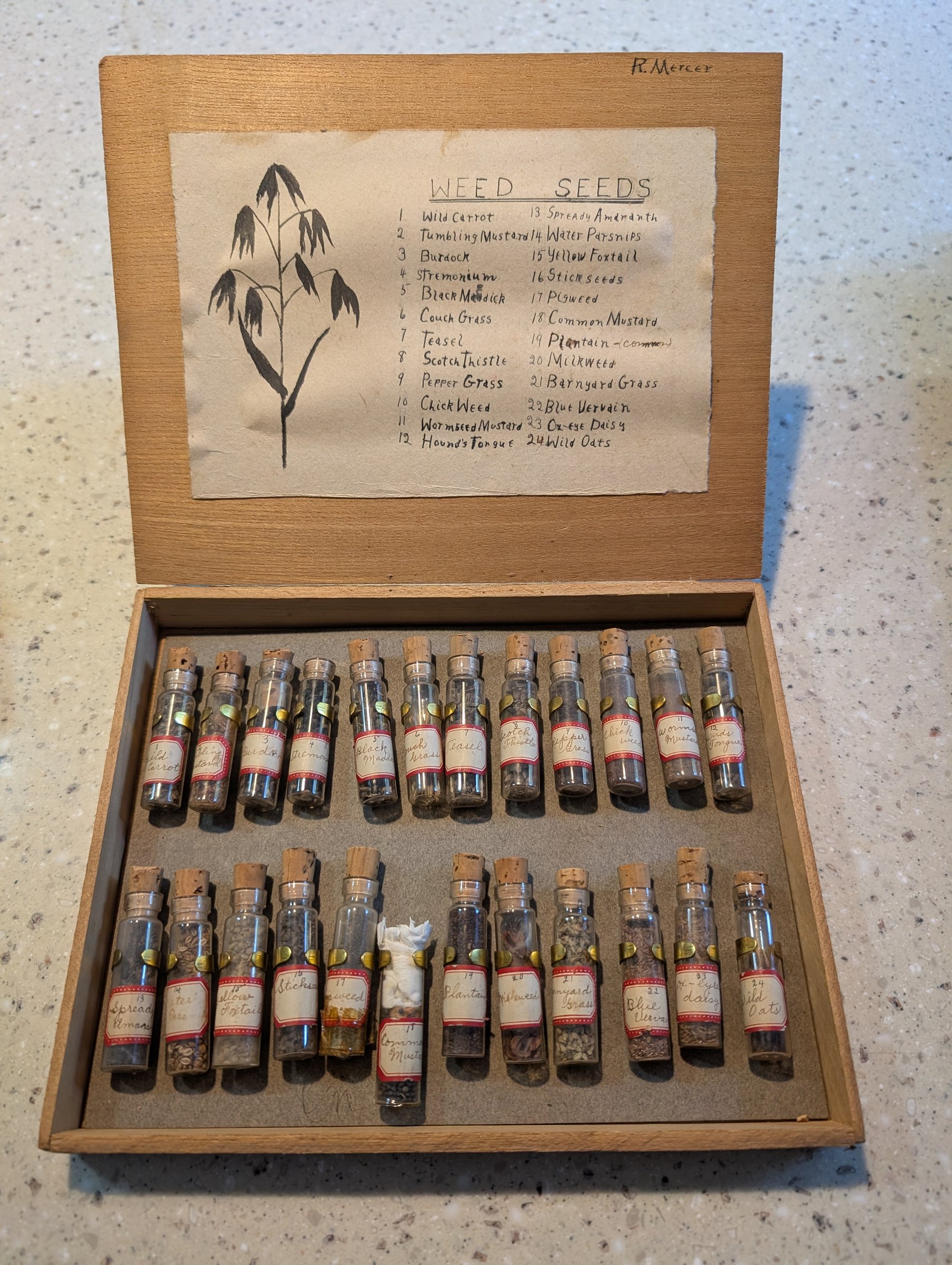
R. Mercer of "room 3 H.N.S" made this collection of 24 kinds of seeds, and a lovely label for the box. We don't know where or when they made this, but it's a good example of the kind of project that schoolchildren did a century ago.
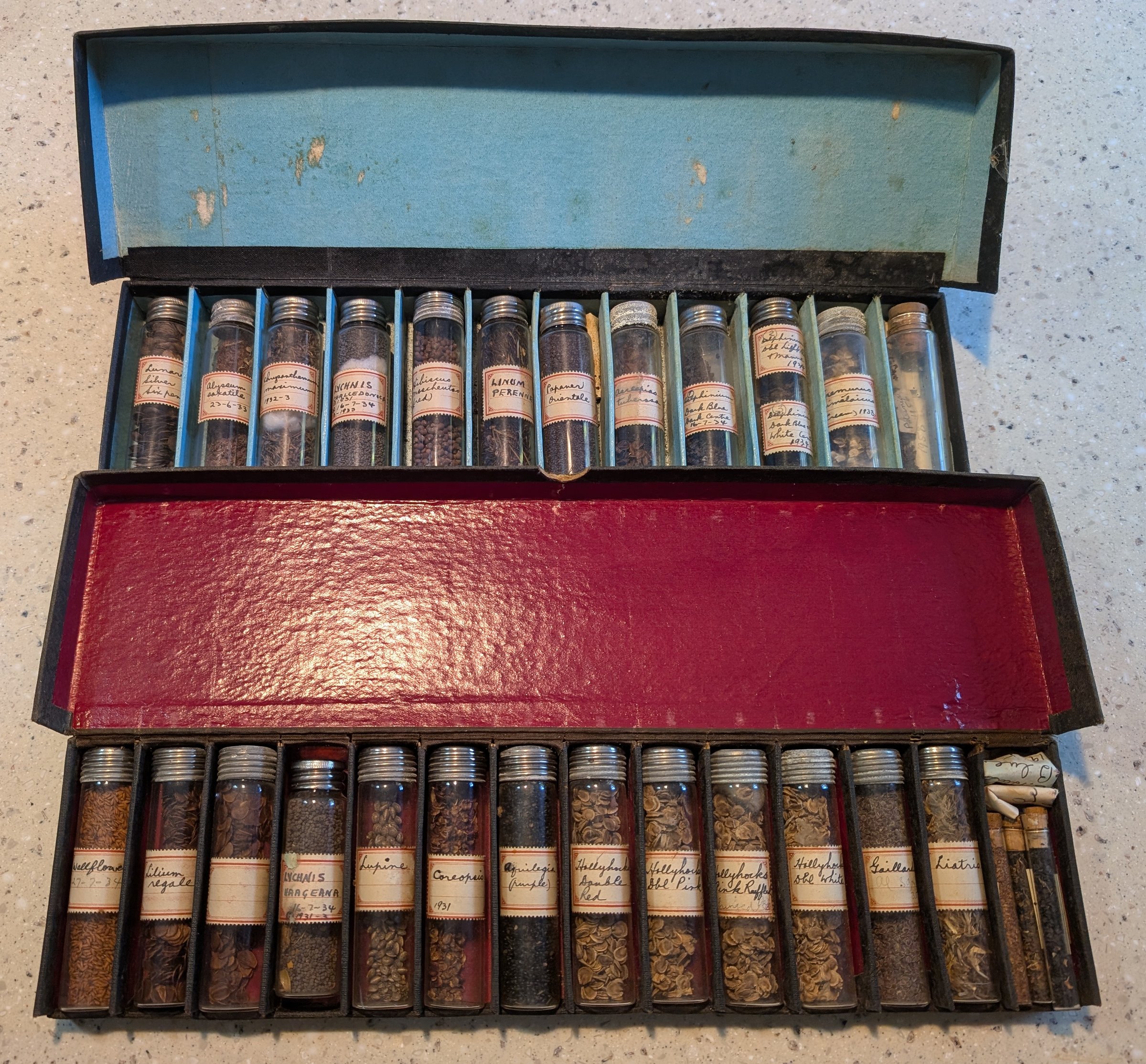
This collection features common garden flowers such as hollyhocks, liatris, and wallflowers. We don't know who made it, or where, but the dates on the vials range from 1931 to 1934.
Not yet a member?
An annual membership to Seeds of Diversity gives you access to our seed exchange, seed grow-out programs, and our online news.


We depend on donations to do our work.

Thank you for your support!
Stay in Touch!


